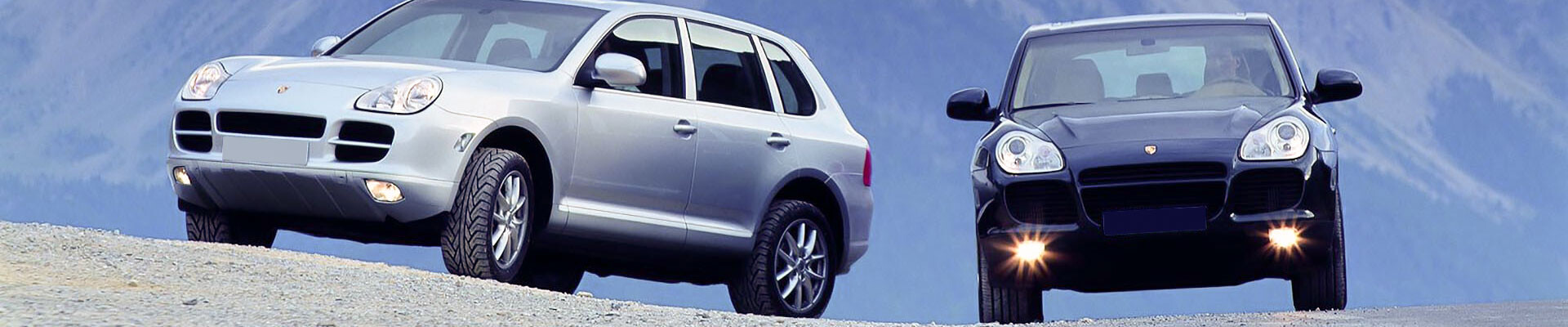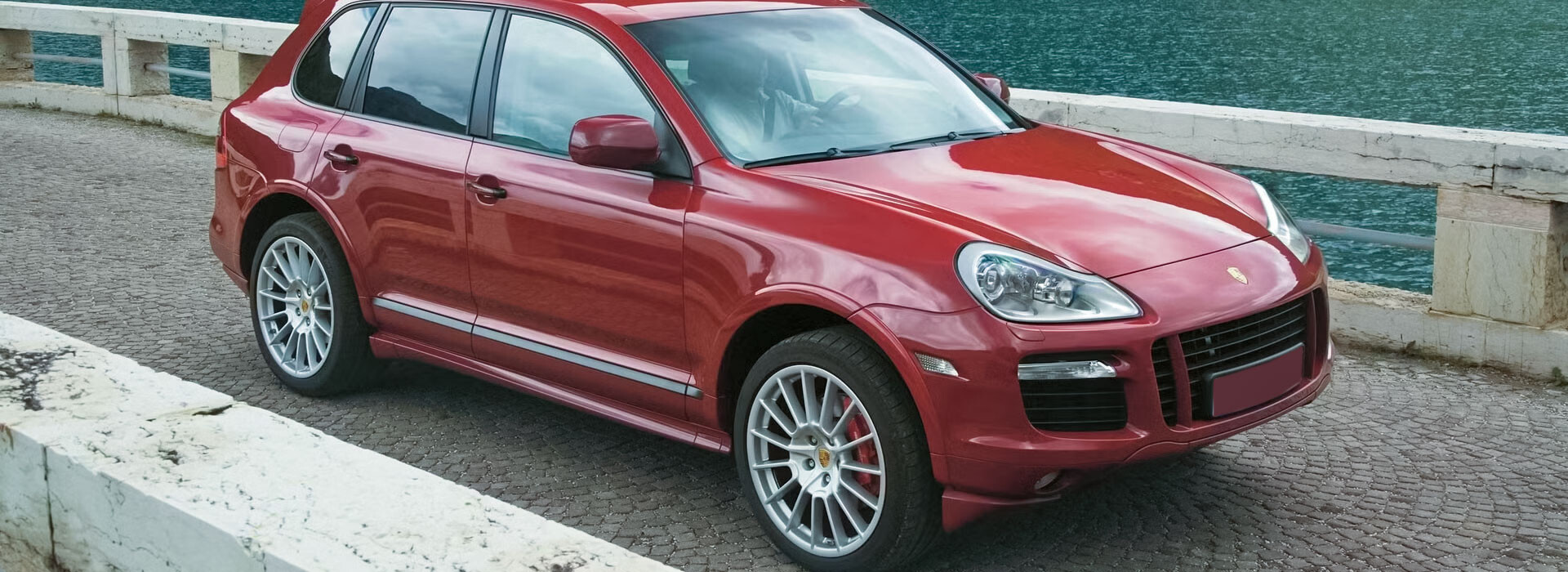
Porsche Cayenne Buyers Guide 2003 – 2010
Practical Expert Advice to Help You Successfully
Buy a Porsche Cayenne 2003 – 2010 | 955 or 957
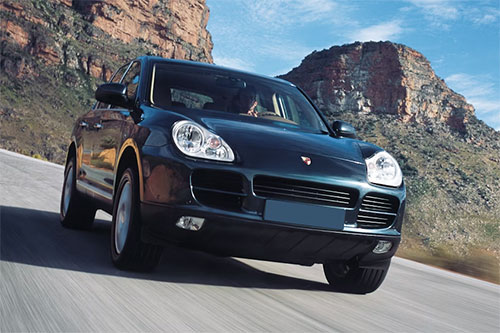 Porsche Cayenne – Top Selling Porsche Model
The Porsche Cayenne, introduced for the 2003 model year, was the first 4 door model ever produced by Porsche. It was met with distain by Porsche purists who questioned the wisdom of a Porsche SUV. Subsequently, the Cayenne proved to be the top selling Porsche model and a stroke of genius that set the trend for many other manufacturers to follow into the luxury SUV market.
Yes, You Should Buy a Porsche Cayenne
The Cayenne is solid, practical, and comfortable – and it’s a Porsche, so what’s not to like. You can jump in a 430HP twin turbo V8 Porsche and clock 60 mph in 4.3 seconds on the way to the grocery store – seriously, who doesn’t want that? The Cayenne however, isn’t without faults, so finding the perfect used Cayenne isn’t easy.
 How This Cayenne Guide Can Help You
This guide will help you avoid costly mistakes and common pitfalls with a used Cayenne. We skip the fluff and focus on what truly matters – mechanical concerns, known issues, realistic ownership costs, ongoing maintenance, and expert tips to help you find a worthwhile Cayenne.
Be Aware of What You’re Getting Into
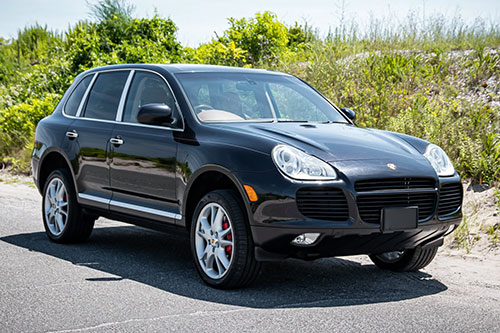 Understanding Your Cayenne Buying Goals
Having a good sense of why you want to own an older Porsche Cayenne makes ownership free and easy. We think the Cayenne works best for:
- Practical everyday short commuter
- Safe all weather capable SUV
- Practical luxury for grocery runs to weekend get aways
- Platform for off-road project
We don’t think it works so well for:
- Low cost SUV maintenance and repairs
- You can’t afford to scrap it!
 Consider the Unthinkable Before You Buy an Early Cayenne – Costly Repairs or Scrap.
The original Cayenne is more than 20 years old and has a series of known issues that can prove catastrophic. 955 and 957 models can be low cost to purchase with most models typically north of a 100K miles and starting to show their age. We think you must consider the unthinkable before you make your purchase. Can you afford to throw the SUV away or invest in the Cayenne long-term?
 Cayenne Buyers Quick Check List
Before you buy any car, there are a series of questions that you need answers to. See the section “What to look for when buying” below for more detail.
- Why is the car for sale?
- Who is selling the car?
- Actual production date – sticker on driver’s door
- Mileage, maintenance, and repair history
- Number of owners
- Title status: Clean / salvage / rebuilt / other
- Accident history (check Carfax or AutoCheck)
- Service records available
- Geographic ownership history (climate matters: dry vs humid areas)
The sections below open to provide more detail. Select a topic that you want more detailed information on.
Porsche Cayenne Brief History – What We Know So far
What We Know About the Cayenne So Far
 The Porsche Cayenne was first seen in late 2002 and went on sale in the US in 2003. Very rapidly the Porsche Cayenne became the top selling Porsche model and continued to hold that spot right up to the launch of the Macan in 2014. The idea of a family Porsche SUV came right on the back of Porsche switching the 911 to water cooled engines and launching the 996. This effectively split the Porsche community into two groups – one that sees Porsche as a classic air-cooled coupe car manufacture and the other that sees Porsche for what it is – a luxury SUV manufacture with niche coupe models and racing heritage.
This split in thinking is still raw in some circles today – one air-cooled specialist described to us that everything after the 993 was a toy and not a real Porsche!
Cayenne Maintenance and Repair Support
The Cayenne is an everyday practical family SUV made by a luxury manufacture. Critically, finding the right expertise to take care of your Cayenne takes more than finding someone who claims to work on Porsche. There is a huge difference between the needs of the Cayenne versus air-cooled cars or high-end late model 911s. Some shops will frown upon the suggestion of working on the Porsche SUVs – they only want the 911 customer! Selecting the right type of shop to help you is critical. Look for dealer alternate shops that work on European brands. We list independent specialists who can typically save you 20% on the cost of maintaining your Cayenne versus dealer service.
The Popular Porsche SUV – 955 and 957 Cayenne
The Porsche Cayenne is fun and exhilarating to drive, yet can be used as a practical SUV every day. Porsche worked with VW and Audi on a common platform but designed unique suspension, interior, all-wheel-drive, steering, and engines. The first-generation Cayenne was in production until 2006 and then underwent a significant facelift in 2008 with the arrival of the 957 version. The 957 version of the Porsche Cayenne 957 heralded sleeker looks, better reliability, lower ride profile, enhanced performance, new interior, and expanded color choices. The 957 brings a more contemporary look and more optional performance technology than the 955.
Issues with the 955 and 957 Cayenne
In general the first version of the Porsche Cayenne was pretty reliable. Issues that came up tended to fall into two categories – unusual or catastrophic! The unusual issues were caused by a mixture of poor design, such as two MAF sensors competing with each other, or cheap wiring leading from the suspension to headlights, while the catastrophic issues e.g. engine or transmission failure were a mix of wrong material parts, lack of maintenance, or poor design. Support for the Cayenne from Porsche wasn’t that great either with the factory PIWIS tool often not able to see further than reported codes, thereby forcing the use of experience or in many cases, guess work!
Cayenne 955 Versus Cayenne 957
The Porsche Cayenne 957 version was a facelift of the original 955 and was introduced for 2008 model year. The 957 version includes:
- Redesigned front bumper, hood, and fenders
- More integrated headlights
- LED taillights and daylight running lights
- Larger capacity VR6 engine
- New 4.8L V8 with DFI and improved performance
- More performance options such as PDCC
- Upgraded PCM and interior finish
- GTS model added
- Upgraded Tiptronic transmission
Porsche Cayenne 955 / 957 Reputation
 The first-generation Cayenne (955 and 957) has developed a pretty distinct reputation over the production years and subsequently through the aging process. It was Porsche’s first SUV, very controversial when launched, and much was learned. The original Cayenne, even the Turbo model, is a bargain as a used car – a lot of Porsche for little money. However, the purchase price can easily be spent again multiple times on repairs if you do not choose your model carefully.
Misunderstood Cayenne
Much of the Cayenne reputation falls in to the description “money pit.” There are plenty of known issues and the costs of repairs and maintenance can easily exceed the value of a used Cayenne. Most of this comes down to a misunderstanding of what is required to maintain a luxury Porsche SUV.
Many of the second, third, or fourth owners recognized the depreciation, saw what they thought was a bargain used SUV versus other manufacturers, and snapped up a Cayenne. Subsequently, the cost of running, maintaining, and repairing the Cayenne moved them on quickly – typically skipping maintenance and repair work needed. The result is a collection of neglected Cayenne models in the used market and complaints about repair or maintenance costs. It’s a Porsche – it’s going to cost more to repair and maintain.
Abandoned Cayenne
For example – we had a new customer bring us a 06 Cayenne with a recorded 130K miles (about 11 years old at the time). The suspension was sagging, CEL, and running rough – he wanted a diagnosis and inspection of the vehicle – “tell me what it needs.” After inspecting the vehicle we reported back – our estimate of the minimum required to make the Cayenne safe to drive and able to pass emissions was over $16K! “Damn, says the customer, I’ll get back to you.” He never did and just abandoned the Cayenne – never heard from him again. Unfortunately, this story is repeated in many repair shops around the country. Along with money pit, the word neglect is also relevant to older Cayenne models.
Don't Buy a 2007 Cayenne Model
There wasn’t a 2007 Porsche Cayenne model year because Porsche skipped it. The facelifted 957 generation was introduced in late 2007 as a 2008 leading to some confusion.
Porsche chose to skip the 2007 model year before a significant redesign and align the 957 launch with the model year in Europe. The first-generation model was extended to include a “2006.5” model – just to add confusion.
What People Like About the 955/957 Cayenne
Driving Dynamics and Feel
- Consistently praised for feeling more like a sports car than an SUV despite large size.
- Good chassis that corners flat, with precise steering.
- Easy for long journeys – will cruise effortlessly all day long above the speed limit!
Build Quality & Interior
- High quality interior materials, fit-and-finish, combined with solid construction.
- Premium feel interior with low noise and no rattles.
- Seats are firm and comfortable for long-distance drives.
- Doors shut with a solid thud and quality sound.
- 957 facelift had improved materials and cabin layout.
- Prestige factor – it’s a Porsche!
Performance
- The V8 models deliver a robust, solid power feeling.
- The V8 engine delivers a muscle feel.
- VR6 or V6 models are considered solid for daily use.
- Quick acceleration for size – Turbo model is awesome!
- Transmission is smooth and robust.
- Confident performance in bad weather.
Off-Road & Practicality
- True off-road abilities – low-range transfer case, locking center differential, and adjustable ride height.
- AWD system with Porsche Traction Management is regarded as very capable in snow and rough weather conditions.
- Large rear cargo space, wide-opening tailgate, and roof rack options make it handy for family trips.
- Can tow up to 7,700 lbs – one of the strongest in its class.
Value
- Underrated Porsche – cheap purchase price.
What's Not to Like About the 955/957 Cayenne
- Fuel economy and small tank – Real world mpg is significantly less than tested – 12 to 15 at best.
- Infotainment – dated compared to newer versions and can have issues.
- Maintenance and repair costs – Porsche service and repair costs come with a luxury price tag.
- Transmission – maintenance required more frequently than recommended.
- Excessive brake wear – heavy SUV and soft powerful brakes equals quick wear.
- Interior buttons loose markings completely.
- Interior plastics are prone to cracking.
- More road noise than to be expected from luxury SUV.
- Key and security system issues – complete lockout.
Extensive Knowledge Available For Maintenance and Repairs
A thorough PPI and some historical research into the Cayenne you want to buy should reveal the details of the maintenance history. Pay special attention to the transmission service history and the maintenance or repair of the transfer case.
Acronyms, Abbreviations, and Model Options
Porsche Options and Acronyms
Porsche offers a wide range of build options that allow buyers to customize nearly every aspect of their vehicle, from performance upgrades and wheel designs to interior trims and driver-assistance systems. Options and performance technology typically attract an acronym! So, it’s easy to get lost between your PSM, PDCC or PADM when shopping for a used car. In our acronym and options section we list and explain the most common acronyms you’re likely to see when shopping for a used Cayenne.
Most vehicles in the USA are not factory ordered by the original owner and typically configured with less available options. Some options were included as a basic requirement for specific market trims. When shopping and comparing prices on a used Cayenne, check the installed options thoroughly. Some options, for example PASM, PSE, or Sport Chrono can add significant value to the car in question.
These are the build options for the 955 / 957 Cayenne range:
Exterior Options
- Paint-to-Sample (PTS) – Special-order Porsche colors.
- Wheels – Multiple designs, sizes from 17 inch to 21 inch.
- Roof options – Standard steel roof, tilt/slide sunroof.
- Full panoramic roof.
- Tow package – factory trailer hitch and wiring.
- Running boards or side steps.
- Roof rails black, silver, or deleted.
- Bi-Xenon headlights.
- Privacy glass / heat-insulating glass.
Interior Comfort & Luxury
- 12-way power adjustable seats
- Adaptive sport seats.
- Upholstery – Leatherette, smooth leather, natural leather, Alcantara.
- Heated seats front & rear.
- Ventilated seats – later 957 models.
- Memory package – linked to key settings – KESSY.
- Rear seat package – split-fold, sliding adjustments.
- Steering wheel options – standard, multifunction, or wood/carbon/aluminum trim.
- Interior trim – painted, wood veneer, aluminum, or carbon fiber.
- Bose audio system or later Burmester in 957.
- Rear-seat entertainment system.
Technology & Infotainment
- PCM – Early versions had small screens, 957 had larger, more modern navigation.
- CD changer / DVD navigation.
- Phone module / Bluetooth – 957.
- ParkAssist.
- Rear-view camera – 957
Chassis, Performance & Handling
- Air suspension (PASM) – Adjustable ride height + damping.
- PDCC (Porsche Dynamic Chassis Control) – Active anti-roll bars.
- Locking rear differential – 955 and early 957.
- Off-road Tech Package – Included locking rear diff, skid plates, hill descent control.
- SportDesign package – Aero kit, side skirts, unique bumpers.
- Sport exhaust – PSE – 957 GTS – Louder, switchable sound.
- Big brake package.
Off Road 955 / 957 Cayenne
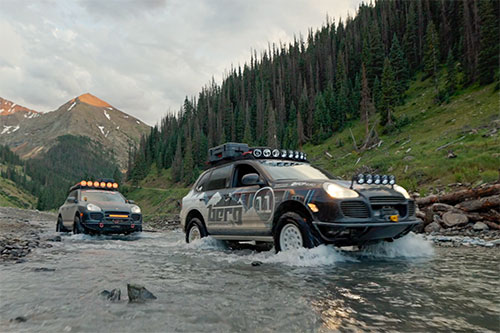 So, what to do with a 20 year old Cayenne? The Porsche Cayenne 955 and 957 features a locking central differential and low range transfer case, making the Cayenne an ideal platform for off-road projects. Later models after 2010 do not have these features. The older Cayenne is cheap to buy and with some investment can be turned into a fun off-road vehicle – breathing life back into the old SUV.
A number of companies specialize in building the off-road Cayenne versions. Berg Peaks is just such an example – their off-road Cayenne builds range are exceptional and range from minor upgrades to all-out trail blazing monsters.
Pricing, Market Trends - Buying Resources
Pre-Owned Cayenne Market Summary - 03 thru 2010
- Cheap to buy, expensive to own – Running cost can exceed resale value.
- Most models have bottomed out on depreciation – cheap as chips!
- Many neglected high-mileage examples on the market.
- Good well maintained models are scarce and command a premium.
- Reliability reputation – many buyers are put off by the perceived lack of reliability.
- Base VR6 models are simpler, less powerful, generally more reliable, and cheaper to maintain.
- V8 models offer great performance, but have higher risk for big-ticket repairs.
- Collector interest – 957 GTS 6-speed manual – very rare.
- Turbo S models are starting to climb in value.
- Some clean early Cayenne models are being bought up for off-road projects.
Cayenne 955 / 957 Pricing & Market Trends as of 2025
The 955 / 957 Cayenne models are at the bottom of the curve for depreciation. Prices are very much conditional upon mileage covered, repair history, and maintenance history. Buy the best-maintained one you can find:
- Base VR6 models – $4,000 – $9,000
- Cayenne S – $6,000 – $12,000
- Cayenne Turbo – $9,000 – $18,000
- Cayenne GTS – $15,000 – $30,000
- Turbo S – $18,000 – $35,000
How Rare are the 955 / 957 Models
Introduced in the USA in 2003, the Cayenne sparked strong early interest and quickly became the largest portion of Porsche sales. In 2005 – 2007 sales volume peaked and thereafter, demand tapered, with a noticeable decline during the 2008 – 2010 period coinciding with the economic downturn.
That leaves you with approximately 63K models actually sold in the USA during the 955 / 957 production. Once you start to delve into the market in detail, and the model specifics, you find some models are quite rare – especially given the number that have been neglected or scrapped.
Compare the Cayenne 63K sales total to the Ford F150 at 5.6 million over the same period, and you start to see why the Cayenne is rare, and also why expertise on the Cayenne is not commonplace.
Sourcing A Good 955 / 957 Cayenne
Most of the good and certainly the rare examples of the early Cayenne are going to end up at a Porsche sales specialist we list on our resource page. These cars will attract a premium price, might be on consignment sale, or at a quality auction site when they become available.
You might be lucky. Sometimes, you’ll find an excellent example or a diamond in the rough in an unusual spot. Nobody is going to sell a Porsche cheap, unless 1) they incorrectly perceive problems with the car or 2) there are real problems with the car or 3) they have no clue! Your job is always to be better informed than the seller. The market drives down the price of good examples, so there are still bargains to be found if you shop carefully.
Porsche Cayenne 2003 Thru 2010 In Detail
955 Cayenne Versus 957 Cayenne - Key Differences
The 957 version of the Porsche Cayenne was essentially a facelift and refinement of the original 955 version with a number of mechanical fixes and additional options added. The 957 version was available from 2008 and introduced:
- Revised engines with larger capacity
- More power and torque
- Direct Injection on V8 engines
- Redesigned front bumper, headlights, and fenders
- LED taillight assemblies
- Optional PDCC (Dynamic Chassis Control)
- Optional KESSY keyless entry/start
- Improved PCM 3.0 with touchscreen, Bluetooth, iPod integration
- GTS model introduction
Comparing the 955 Cayenne Trims or Versions 03 thru 06
955 Cayenne Base
- 3.2L VR6 narrow angle V6 engine
- 247 HP
- 228 lb-ft torque
- All wheel drive
- 6 speed Tiptronic S transmission
- Low range transfer case
- Locking center differential
955 Cayenne S Model
- 4.5L V8 engine
- 340 HP
- 310 lb-ft torque
- All wheel drive
- 6 speed Tiptronic S transmission
- Low range transfer case
- Locking center differential
955 Cayenne Turbo Model
- 4.5L V8 twin turbo engine
- 450 HP
- 457 lb-ft torque
- All wheel drive
- 6 speed Tiptronic S transmission
- Low range transfer case
- Locking center differential
955 Cayenne Turbo S Model
- 4.5L V8 twin turbo engine – tuned with higher boost.
- 520 HP
- 530 lb-ft torque
- All wheel drive
- 6 speed Tiptronic S transmission
- Low range transfer case
- Locking center differential
Comparing the 957 Cayenne Trims or Versions 08 thru 10
957 Cayenne Base
- 3.6L VR6 narrow angle V6 engine
- 290 HP
- 273 lb-ft torque
- All wheel drive
- 6 speed Tiptronic S transmission
- Low range transfer case
- Locking center differential
957 Cayenne S Model
- 4.8L V8 engine DFI
- 385 HP
- 369 lb-ft torque
- All wheel drive
- 6 speed Tiptronic S transmission
- Low range transfer case
- Locking center differential
957 Cayenne GTS Model
- 4.8L V8 engine DFI – tuned
- 405 HP
- 379 lb-ft torque
- All wheel drive
- 6 speed Tiptronic S transmission
- Low range transfer case
- Locking center differential
957 Cayenne Turbo Model
- 4.8L V8 twin turbo engine
- 500 HP
- 516 lb-ft torque
- All wheel drive
- 6 speed Tiptronic S transmission
- Low range transfer case
- Locking center differential
957 Cayenne Turbo S Model
- 4.8L V8 twin turbo engine – tuned with higher boost.
- 550 HP
- 553 lb-ft torque
- All wheel drive
- 6 speed Tiptronic S transmission
- Low range transfer case
- Locking center differential
Base Cayenne Versus Cayenne S Model - Key Differences
Cayenne S model features:
- Larger capacity V8 engine
- 100+ more HP
- 100+ more lb-ft torque
- 3 seconds quicker 0-60mph time
- Higher top speed
- Larger brakes
- Dual oval tipped exhaust
- 18 inch standard wheel size
- Leather interior with sportier seats
- Typically $5K to $10K premium in used market depending on condition
957 Cayenne S Versus Cayenne GTS Model - Key Differences
Cayenne GTS model features:
- Tuned V8 engine with DFI
- 15+ more HP
- 11+ more lb-ft torque
- Quicker 0-60 mph time
- Higher top speed
- Sportier suspension setup lowered by 20mm
- Wider suspension setup
- Wider body look through unique front and rear bumpers
- Larger brakes
- Dual round tipped exhaust
- 21-inch wheels
- Alcantara interior with sportier seats, revised trim
- Typically $8K to $12K premium in used market depending on condition
Cayenne Turbo Versus Cayenne GTS Model - Key Differences
Cayenne Turbo model features:
- Twin turbo V8 engine
- 90+ more HP
- 140+ more lb-ft torque
- Quicker 0-60 mph time
- Higher top speed
- Sportier suspension setup lowered by 24mm
- PASM tuned air-suspension setup
- Turbo front and rear bumpers
- Larger brakes – optional PCCB
- 21-inch wheels
- Typically $12K to $17K premium in used market depending on condition
Turbo S Model - Key Features
Cayenne Turbo S model features:
- Twin turbo V8 engine
- 50+ more HP
- 40+ more lb-ft torque
- Quicker 0-60 mph time
- Slightly higher top speed
- PDCC suspension
- PASM tuned air-suspension setup
- Turbo S front and rear bumpers
- Standard PCCB brakes
- 21-inch wheels
- Upgraded interior trim
- Typically $20K premium in used market depending on condition
Cayenne Engines 2003 thru 2010
955 Cayenne Base Engine
- VW BHK VR6 (common in VW Group)
- 3.2L VR6 6 cylinder, narrow V6 configuration
- 247 hp @ 5,000-6,000 rpm
- 228 lb-ft @ 4,500 rpm
- 6,500 rpm redline
957 Cayenne Base Engine
- VW BHK BFD (common in VW Group)
- 3.6L VR6 6 cylinder, narrow V6 configuration, with DFI
- 290 hp @ 5,000-6,000 rpm
- 273 lb-ft @ 4,500 rpm
- 6,700 rpm redline
955 Cayenne S Engine
- Porsche M48
- 4.5L V8
- 340 hp @ 5,000-6,000 rpm
- 310 lb-ft @ 4,500 rpm
- 6,500 rpm redline
957 Cayenne S Engine
- Porsche M48.01
- 4.8L V8 with DFI
- 385 hp @ 5,000-6,000 rpm
- 369 lb-ft @ 4,500 rpm
- 6,700 rpm redline
957 Cayenne GTS Engine
- Porsche M48.51
- 4.8L V8 with DFI and tuned
- 405 hp @ 5,000-6,500 rpm
- 379 lb-ft @ 4,500 rpm
- 7,000 rpm redline
955 Cayenne Turbo Engine
- Porsche M48.50
- 4.5L V8 twin turbo
- 450 hp @ 5,000-6,000 rpm
- 457 lb-ft @ 4,800 rpm
- 6,500 rpm redline
955 Cayenne Turbo S Engine
- Porsche M48.50s
- 4.5L V8 twin turbo
- 520 hp @ 5,000-6,000 rpm
- 530 lb-ft @ 4,800 rpm
- 6,500 rpm redline
957 Cayenne Turbo Engine
- Porsche M48.70
- 4.8L V8 twin turbo
- 500 hp @ 5,000-6,000 rpm
- 516 lb-ft @ 4,800 rpm
- 6,700 rpm redline
957 Cayenne Turbo S Engine
- Porsche M48.70s
- 4.8L V8 twin turbo – tuned
- 550 hp @ 5,000-6,000 rpm
- 553 lb-ft @ 4,800 rpm
- 6,700 rpm redline
955 / 957 Cayenne Transmission
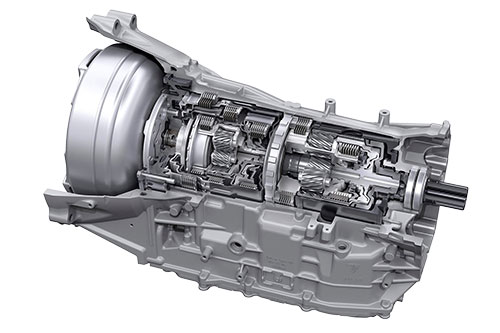 Both the 955 and 957 Cayenne models use the Aisin TR-60 6 speed Tiptronic transmission. A manual transmission was also available but less than 3% of Cayenne owners chose that option. The 957 models have a revised control unit to produce better and smoother shift patterns.
The transmission is smooth and conservative in shifting to match the SUV design. Tweaks to the software enabled the Turbo and Turbo S model to change gear a little quicker and the steering wheel shift buttons enable a manual shifting mode.
The transmission is highly reliable and typically goes 200K miles provided regular maintenance has been performed. Early versions did experience valve body issues, however, this was overcome with a revised version of the part.
955 / 957 Cayenne Suspension
 Porsche offered a mix of standard and optional setups for the suspension on the 955 and 957 that made a huge difference in how the SUV drove and repair costs.
The standard coil spring with passive damper suspension is rugged, durable, and less forgiving over bumps. Easy to maintain, reliable, and easy to diagnose issues. As the suspension has aged, components such as lower control arms and dampers need to be replaced to maintain alignment and ride quality.
Many S models were fitted with an optional air-ride suspension setup. The air-ride suspension became the standard fitment for the GTS and Turbo models with PASM included and the PDCC option available. The air-ride suspension was tuned for normal ride height level based on model type – the Turbo and GTS riding 20+mm lower than the S model for example.
The air ride suspension features include:
Multiple ride heights
- Loading level (very low for cargo)
- Normal road level
- Off-road level
- Special off-road level (maximum height, ~273 mm ground clearance)
Multiple modes – damper setting
- Comfort
- Normal
- Sport
The air-ride suspension had a number of issues that were often frustrating to diagnose and commonly not flagged well by the OBD system. Owners would commonly see chassis system failure. Both the suspension and the components that support it were improved through the Cayenne generations. Air-ride failures tend to be more expensive to repair – struts, valve-blocks, and compressors for example have a luxury price tag. Check the type of suspension fitted to the 955 or 957 model you intend to buy – what’s fitted will affect your ride home quality and your wallet!
Cayenne Interior
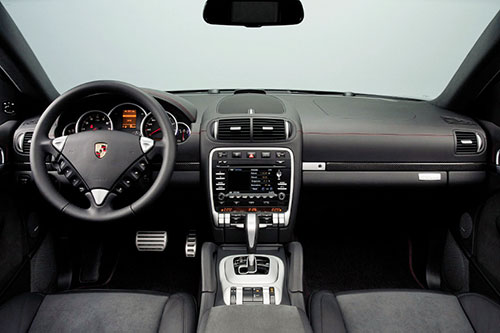 Interior Likes
- Solid build quality with heavy doors and quality feel.
- Driver-focused layout with clear analog gauges.
- Firm and supportive seats that hold up well on long drives.
- Good visibility and commanding feel behind the wheel.
- High-end leather, wood trim, optional colors – each Cayenne is different.
- Multi-function steering wheel.
- Heated seats front and rear.
- Versatile rear seats fold flat.
- Quiet cabin and low road noise.
- Large cargo area with lots of storage.
- Infotainment improved with 957 and Bose audio.
- Switches improved with 957.
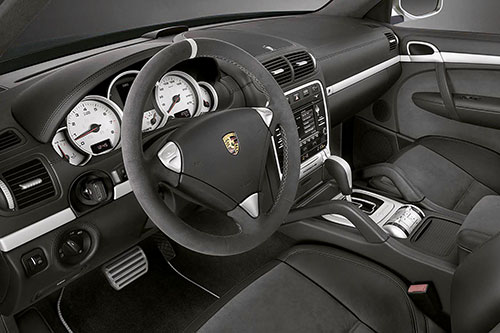 Interior Dislikes
- Hard plastics starting to crack – improved with 957.
- Switches peel, deface, and become sticky – improved with 957.
- Alcantara option can wear quickly.
- Climate and window switches developed a gummy texture.
- Dated PCM infotainment lacking phone connectivity.
- Interior design criticized for being busy and not premium enough.
- Limited rear seat comfort for long journeys.
- Leather can crack if not well cared for.
Cayenne 955 / 957 Exterior Colors
Porsche Cayenne Exterior Colors – 955 / 957 2003 thru 2010
- Sand White
- Black
- Crystal Silver Metallic
- Basalt Black Metallic
- Dark Sea Blue
- Jarama Beige Metallic
- Carmona Red Metallic
- Lapis Blue Metallic
- Prosecco Metallic
- Meteor Gray Metallic
- Dark Olive Metallic
- Olive Green Metallic
- GTS Red
- Macadamia Metallic
- Lava Gray Metallic
955 – 957 Cayenne Common Issues and Reliability Concerns
 Cayenne Known Mechanical Issues
When considering a pre-owned Cayenne, don’t let noise of mechanical issues or reliability concerns discourage you. Many of the known issues have been resolved through updated parts. Your biggest concerns with the 955 or 957 revolve around maintenance neglect. A thorough evaluation during a PPI should reveal everything you need to know. With proper planning, issues can be addressed proactively or managed throughout your ownership.
Recommended Porsche Repair Shops You Can Trust
Cayenne 955 and 957 - 03 thru 10 Engine Issues
Timing Chain Wear VR6 Engines
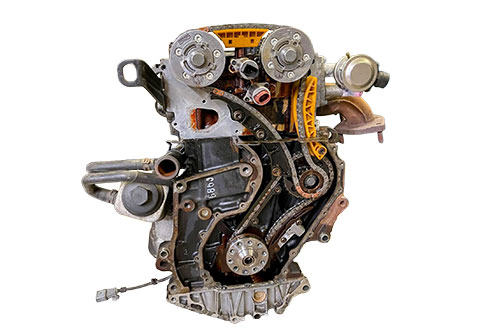 The timing chain in the VR6 engine connects the crankshaft with the camshafts and correctly times the movement of the valves and pistons. The chain runs over a number of plastic guides and is held tight by a chain tensioner. Over time, the chain can stretch, the tensioner becomes weaker, and the guides wear out. The result is a chain rattle at engine start and eventually a loss of engine timing. This leads to misfires and potentially significant damage because the valves can make contact with the pistons – this is known as interference and is expensive to fix.
For any VR6 engine Cayenne, check the history for repairs associated with the timing chain, guides or tensioners. North of 100K miles this job is inevitable and many engines don’t make it that far. The work is expensive and requires the right skills – see specialist shops that can help you.
Coolant Pipe Leaks V8
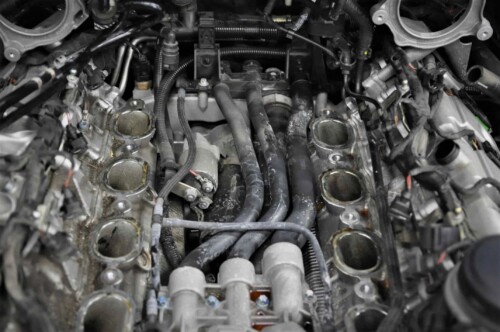 If you are researching for known issues on the 955 V8 engines you’ll likely read many stories of failure in the plastic cooling pipes that run underneath the intake manifold on the original V8. This was such a common problem that by now it’s extremely unlikely you’ll find an early Cayenne with the plastic coolant pipes still in place. The surviving majority of engines have been updated with the metal version that Porsche released soon after realizing the issues that the plastic pipes caused. Of course, it’s important to check with the used Cayenne you plan to buy that this work has been completed – if it hasn’t, you should complete the change to metal pipes right away.
The seals for the updated metal pipes can still leak over time, so at the PPI, it’s important to check thoroughly for signs of coolant leaking below the intake manifold.
Water Pump and Thermostat Failure
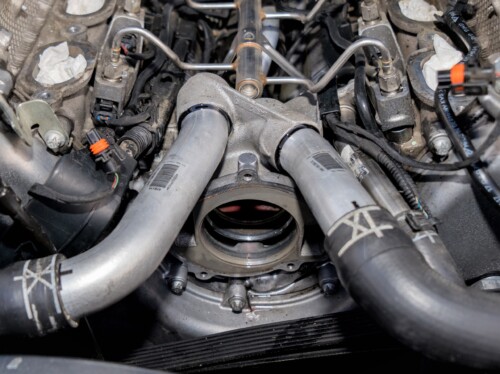 Failure of the water pump and thermostat assembly are common on the V8 Cayenne engine. Check the history to see if the work has been completed before. Both the water pump and thermostat were updated with the revised versions being more durable than the original. If this work has not been completed before, expect to have to replace the water pump and thermostat sooner rather than later.
The work is not difficult and can be completed without too much complication. Failure of either the water pump or thermostat can cause catastrophic overheating, so it’s important to know when this work was done or if it needs to be completed soon. A thorough PPI should examine these areas for coolant leaks which is a sign of upcoming problems. However, the thermostat can fail by becoming stuck open or closed with no leaks visible. Checking the engine warm up cycle and testing for coolant flow is the best way to determine thermostat health.
Misfires and Rough Running - Ignition Coil Failure
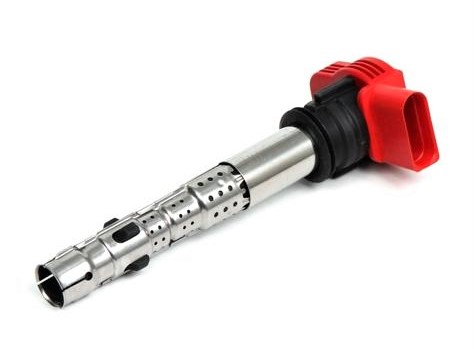 The 955 and 957 Cayenne V8 engines experienced a number of ongoing issues with ignition coil failure. Check the history on the Cayenne you are looking to buy to see if this work has been completed. Most likely it has – not many early Cayenne’s would have made it this far without replacing the ignition coils.
A failing ignition coil typically stops any spark and sets a misfire code with a completely dead cylinder. This will cause rough running, especially at idle. However, coils can also part fail, where a weak spark causes misfires to occur when the cylinder is loaded under acceleration. Resetting the cylinder and clearing the CEL fault will cause the engine to run well at idle but set the fault again when driven more aggressively. Pushing the engine a little on a test drive is a good thing to do to check the health of the ignition coils.
Carbon Build-up - DFI Engines
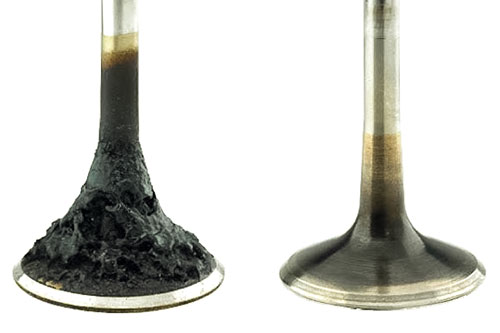 The later DFI engines in the 957 Cayenne are subject to carbon buildup around the intake valves. This causes an intake air-flow restriction and subsequent rough running at idle speed, and a loss of power during acceleration. Typically, the problem is most noticeable between 60K and 80K miles.
The good news is that removal of the carbon buildup is relatively straight forward. There are several ways this can be done from walnut shell blasting through chemical cleaning. Once completed, the runnability of the engine returns to a like new status.
Engine Oil Leaks
Oil leaks from any engine are commonplace. On the Cayenne, the most common leaks occur in the valve covers, and camshaft adjuster seals of the V8 and the rear main seal in the V6. A thorough PPI should identify any oil leaks and what work is necessary to resolve the leaking oil. You should note where the oil is leaking from and also where it is going. On an old Cayenne you might tolerate the odd drop of oil on the floor, however, if the oil is leaking on to the exhaust or the engine wiring harness, then potential catastrophe awaits in the form of a fire with the exhaust or major engine electrical problems in the case of the wiring harness.
Cayenne Turbo Oil Leaks
The Cayenne Turbo models are subject to oil leaks from the oil supply lines to the turbos. This leak is messy and dangerous as the turbos are extremely hot and likely to burn the oil or cause a fire. The oil leaks in the turbo supply lines often cause owners to move on and sell the car. Repair work to replace the turbo oil supply lines is very expensive and complex. In addition, low oil supply to the turbos causes them to wear quickly. The recommended work calls for replacing the oil supply lines and rebuilding the turbos.
PCV Valve & Oil Separator - VR6
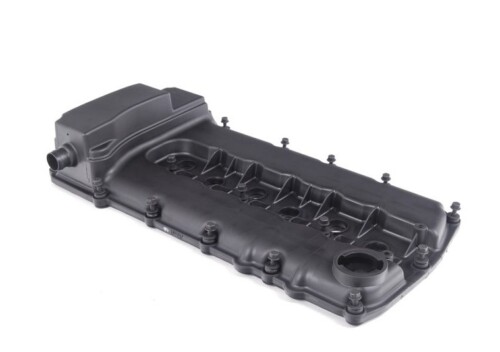 An integral part of the emissions system on the Cayenne V6, is the PCV system that is designed to extract oil from gases in the crankcase. The oil is recycled to the oil sump, while the gas is passed through the combustion path to be burnt and cleaned by the catalytic converters.
When the PCV system fails on the V6 Cayenne engine, it will develop a vacuum leak and set a CEL for lean running conditions – un-metered air enters the intake path through the PCV system and the engine has a loss of power. This was extremely common and is likely to have been repaired at least once on a 955 or 957 V6 engine.
PCV System Failure – V6 Cayenne
A failing PCV system is also the likely cause of rear main seal failure and oil leaks, as it is in other VAG cars. Crankcase gas is not extracted well enough as the PCV fails. This causes pressure to build in the engine case under heavy acceleration and the gas escapes out of the rear main seal causing seal failure and oil leak.
Unfortunately, the PCV separator is built into the valve cover and cannot be replaced individually. The repair requires the replacement of the whole valve cover assembly. Later 957 models were updated and less likely to experience this issue.
Cylinder Bore Scoring
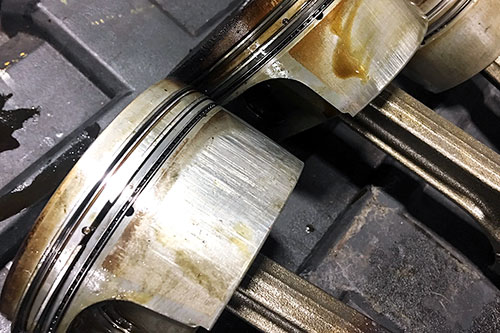 The early V8 engines in the Cayenne are subject to cylinder bore scoring – deep gauges in the cylinder liner, usually associated with a knocking noise and eventually catastrophic engine failure. The root cause of this issue is open to discussion, however, the thinking is material from the piston skirt flakes off and gets stuck under the piston rings and causes the piston to wobble. The wobble occurs at the bottom of the stroke and results in the piston skirt dragging against the cylinder wall thereby scoring the liner.
An early telltale sign can often be one exhaust tailpipe being more sooty black than the other and an increase in oil consumption. In addition, a knocking noise from a single cylinder, commonly on the drivers side of the V8 can also be an early sign of bore scoring. Detecting bore scoring on the V8 is not simple and not typically included within the scope of a PPI.
High Pressure Fuel Pump Failure
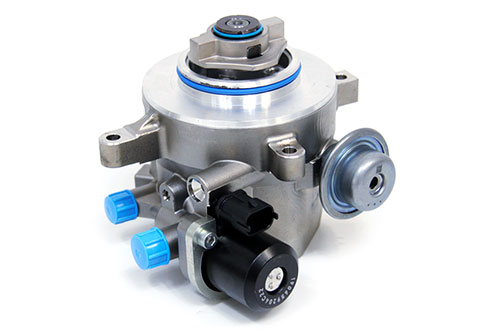 The later Cayenne 957 DFI engines feature a high-pressure fuel pump driven from a camshaft. The high-pressure fuel pump is subject to failure and typically, it initially sets a check engine light and faults associated with the fuel rail pressure.
Typical symptoms of a failing high pressure fuel pump include:
- Delayed start of the engine or long crank time
- Hesitation or sputtering in acceleration
- Lack of power
- Higher engine temperatures
- Engine stalling and being difficult to restart
Misdiagnosed High Pressure Fuel Pump
Lack of fuel in the engine fuel rail sets faults for low fuel pressure. The obvious candidate is the high pressure fuel pump, however, the high pressure fuel pump cannot do its job if no fuel is being delivered to it. The low pressure fuel pump in the tank can also fail and cause misleading symptoms and misdiagnosis of the high pressure pump. Low pressure fuel pumps in the Cayenne have been updated a number of times and will commonly fail.
Valve Lift Solenoid Failure - CEL
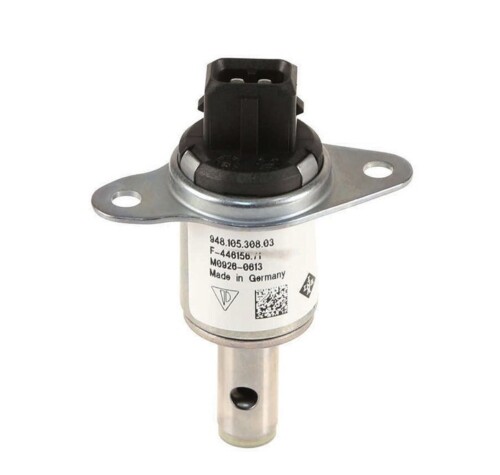 The V8 engine in the Porsche Cayenne will commonly report a CEL for codes associated with an incorrect valve lift on one of the two cylinder banks. The common cause is a failure of the valve lift solenoid.
Valve Lift Solenoid Failure
An electromechanical solenoid that controls oil flow to the valve lifters fails. This causes the regulation of the valve lift to be reported as inconsistent or not correct. On most occasions replacing the solenoid will solve the problem. However, failure in this solenoid can also be a sign of debris in the oil and a lack of maintenance.
Check the history on the Cayenne you plan to buy and see if this work has been completed in the past. If not, it’s a likely failure at some point in the near future.
Coolant Leaks - 957 Cayenne V8
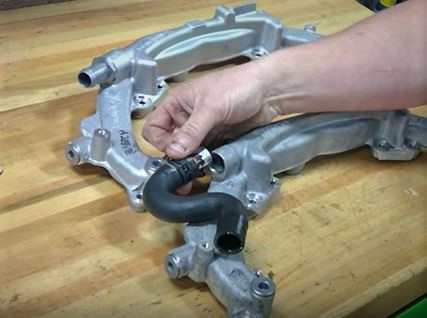 The 957 Cayenne V8 engine has a series of coolant pipe connectors that are glued into their aluminum housings and over time the glue seal begins to fail and coolant leaks out. There are two likely spots for this to occur – the front of the engine or the rear of the engine close to bell housing and the transmission to engine joint.
During the PPI it’s important to establish that these joints are not leaking or at least to confirm that they have been updated to the later metal connection along with the coolant distribution pipe. Coolant leaking at the back of the engine can be an expensive and complex problem to solve.
Cayenne Transmission and AWD – Concerns and Reliability
Cayenne Transmission Concerns
The Tiptronic transmission in the 955 and 957 Cayenne is extremely reliable. Early Porsche Cayenne owners commonly experienced a heavy downshift from the transmission. In many circumstances this was accompanied by much louder gear shifts and clunking sounds from the transmission.
The problem was often mis-diagnosed as a physical failure in the transmission itself, when the more likely cause was in fact the valve body assembly within the transmission. The valve body is an electro-mechanical device the redirects the pressurized transmission fluid through a valving system to enable the physical gear changes. Failure of the mechanism can lead to some wild gear shifts and unpleasant noises. Check the Cayenne you plan to buy for history of work to replace the valve body assembly.
Transmission Maintenance
The Tiptronic transmission in the Cayenne is described as having a lifetime fluid. As a result, maintenance on the transmission has never been performed on Cayenne models on the used market today. Subsequently, the maintenance cycle for the transmission was reduced to 8 years or 80K miles. So, what’s important to determine is if the Cayenne you are looking to buy has had any transmission maintenance performed in it’s lifetime. The general rule is, if no maintenance has been performed, leave the transmission alone. However, if maintenance has been performed historically, it is better to continue to perform maintenance on the 80K schedule.
Transfer Case and Differentials
All 955 and 957 Cayenne models are old enough to have had their transfer case and differential oil changed or renewed per the maintenance recommendations. Check the history on the Cayenne you plan to buy and if you find no evidence of the transfer case or differential fluid maintenance, we recommend you complete that work as soon as possible.
Drive Shaft Support Bearing Failure
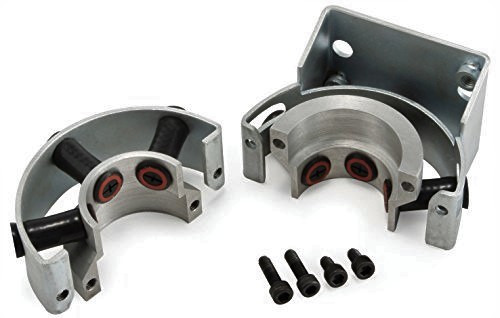 When the Cayenne driveshaft center support bearing fails, the shaft wobbles, vibrates and thumps during acceleration. You’d be hard pressed to find an early Cayenne that hasn’t experienced this problem or currently be somewhere close to experiencing it again. Porsche’s replacement for the bearing wasn’t much better than the original – even the early Macan experienced the same problem!
Axle Assembly and CV Boot Failure
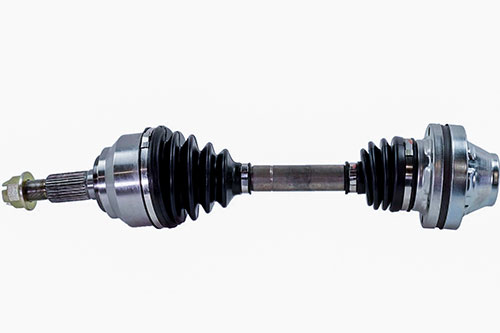 Your going to be hard pressed to find a Cayenne that hasn’t had work completed on the front axles. Over time, the movement and flexing of the rubber boot sealing the CV joint in the axle, will cause the boot to fail. Harsh road chemicals or hot dry environmental conditions can speed up this process. Eventually, the CV boot cracks and the grease comes out. The axle joint dries out and begins to wear rapidly.
With consistent maintenance and ongoing inspections, this problem can be identified early, and often replacing the boot and repacking the joint solves the problem. However, with so many Cayenne models being neglected, the replacement of axles has often been the best solution.
Make sure at a PPI that the axles are checked thoroughly for signs of wear on the CV boots. If you need to replace an axle the work is heavy, expensive, and problematic.
There are third party axle assemblies on the market with varying degrees of quality. Having the original factory axle rebuilt is the best choice – this assumes the original axle is still in the Cayenne you plan to buy!
Electronics, HVAC, Infotainment, Water Leaks
Porsche Communication Management (PCM) Issues
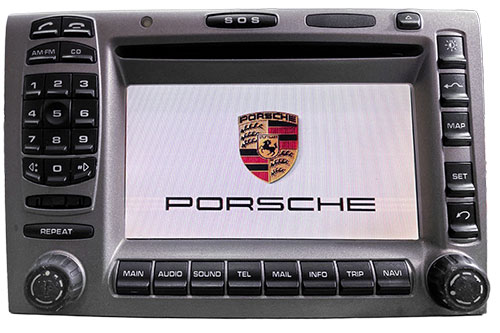 The 955 and 957 Cayenne both have dated infotainment systems. Significant repairs or replacement of the system is an expensive option on a low cost used SUV. There are third parties who offer more cost effective repairs of the system depending on malfunction. We suggest you check the functionality of the PCM thoroughly before completing your purchase and have low expectations of successful interactions with the PCM. Common issues with the 2.x version of PCM in the 955 and 957 included:
- LCD pixels fade or lines appear, making the screen unreadable.
- CD navigation drive failure – last official map update 2014.
- Screen freezes, lags when changing menus, system reset needed.
- Amplifier failure and no sound.
- MOST bus failures – connection between the devices is lost.
- No Bluetooth connectivity.
- Phone connectivity is sketchy at best.
- Backup camera / park assist integration problems.
HVAC Functionality
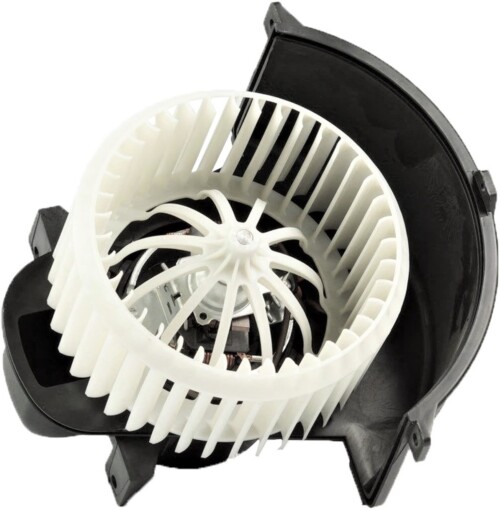 HVAC functionality is often overlooked by buyers and sometimes at a PPI too. The Cayenne has known issues with the blower motor and blower motor resistor that governs the fan speed. Test the HVAC thoroughly for all fan speeds and the correct redirection of air flow through the cabin outlets. Make sure you have cold air with AC and warm air with heating control.
Replacing the blower motor and resistor are fairly straightforward and common. Replacing the motors that control the flow of air through the airbox to the cabin outlets (feet, face, screen) is an expensive proposition. Removal of the dash may be necessary and that’s not a job most people would ever wish to undertake!
Water Leaks - Blocked Roof Drains and Electrical System Damage
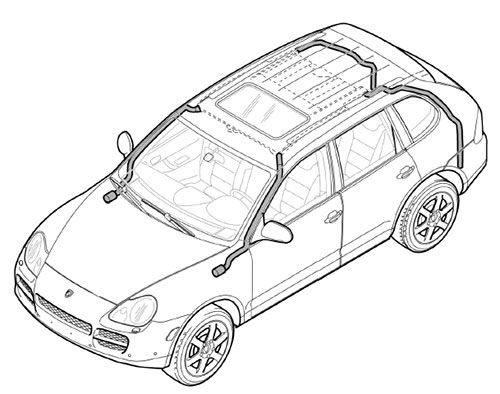 Part of the annual maintenance schedule for the Porsche Cayenne is the clearing of roof water drains. However, this has been overlooked and not carried out in many circumstances. The resultant damage from blocked roof drains can be extensive and a class action law suit was filed against Porsche.
Porsche Sunroof Drains
The Cayenne has 4 drains that take water away from the roof and send it through a tube to an exit point low on the bodywork. These drains can become blocked with debris from leaves, dust and general road dirt. They can also fail or split. Once the drain is blocked, water backs up in the pipe until the pipe gives way or it finds another way out. Unfortunately, the exit point for the water typically seems to be close to sensitive electronic equipment. Water ingress usually results in unusual electrical behavior and is often difficult to pinpoint.
Finding Water Leaks in Your Cayenne
For the Cayenne you plan to buy, check thoroughly for signs of water in the trunk or inside the passenger cabin by the front windshield – blocked or failed roof drains are normally the root cause. The water can very quickly enter the wiring harness, electrical connectors, and control modules near the leak. The replacement of control modules is expensive and often requires additional security programming. Water entering the trunk can also damage the trunk mechanism, exterior lighting, and the trunk interior. Check the history on the Cayenne and see if control modules have been replaced in these areas.
At a PPI ask that the roof drains are thoroughly inspected and declared free to drain. If they are not clear and you purchase the car, clear the drains as quickly as possible afterwards.
Battery Health
Your PPI should include feedback on the health of the battery. Most batteries have a useable life of approximately 5 years. After that, battery performance starts to decline and the battery will eventually fail. Check the age of the battery and the CCA output. See our article on battery health.
This is not as easy as it sounds – the battery is located under the driver seat. The seat needs to be unbolted and tilted backwards with some trim removed to access the battery. Worth paying extra on a PPI to understand the type of battery installed and it’s health before making you purchase.
Steering Faulty - Vehicle Lock Out
 The 955 and 957 Cayenne can experience a complete lock out of the car with the message “steering faulty” visible on the dash. The car will not start and the steering wheel will not unlock. Earlier models are more likely to experience this and many of the probable candidates for this problem have already resolved it. Check the history on the Cayenne you plan to buy and look for work associated with the ELV module, steering column, or KESSY.
Once the dreaded “Steering Faulty” appears on the dash, the steering wheel is now locked and the car is unresponsive to the key. This is usually a failure in the electronic control module (ELV) integrated into the Cayenne steering column. However, cars fitted with KESSY can also have a similar issue related to a failure in the KESSY module and key. Accurate diagnosis is critical.
Cayenne Braking System Check Points
Checking for Brake Wear
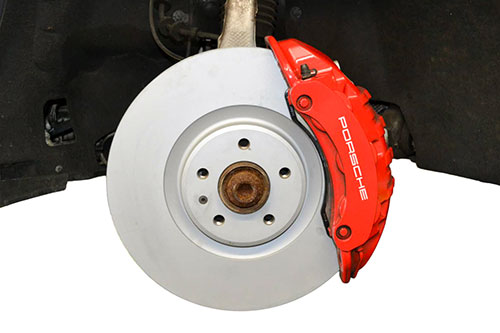 The brakes on the Cayenne are generally excellent with the GTS, and Turbo model featuring larger brakes with drilled rotors. Brake pad material does degrade over time – check on low mileage examples to see when the last brake service was performed. The brake fluid history should show a change every few years regardless of mileage. Also, measure the amount of brake pad material remaining – you want more than 3mm. At the 3mm mark the brake pad wear sensor will trigger the replace brake pads message. This should be reported back with your PPI.
A complete brake service with pads, rotors and sensors can be quite expensive. So, if you’re buying from a used car vendor, look for new pads on old rotors. Both the pads and rotors should always be changed at the same time. Used car centers are famed for just replacing the pads and leaving on the old rotors. “The car has new brakes” – not if the rotors weren’t changed it doesn’t!
Checking Drilled Rotors For Cracks
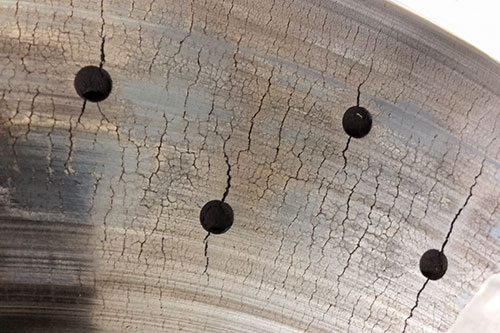 Some performance Cayenne models have drilled brake rotors. Look carefully to see how clear the drill holes are and make sure there are no cracks between the drill holes. Cracks between the drill holes can lead to a much bigger crack developing and rotor failure very quickly under heavy braking. A failed brake rotor when you are trying to stop quickly is an unpleasant experience in a large SUV!
Brake Fluid Condition
Brake fluid has a limited lifetime. Older cars have often skipped the brake fluid service, so it’s important to determine the health of the brake fluid on the Cayenne you plan to buy. Check the history for the last brake fluid flush in the service records. If the last brake fluid service was more than 2 years ago, we recommend you complete a brake fluid service sooner rather than later.
The brake fluid you see in the reservoir maybe be clean and look healthy. This is not a good test. What you can’t see is what matters – the fluid in the caliper at the end of the line the reservoir connects too. Despite the fluid in the reservoir being clean, the fluid in the caliper could easily be burnt and degraded.
PCCB Brake Option
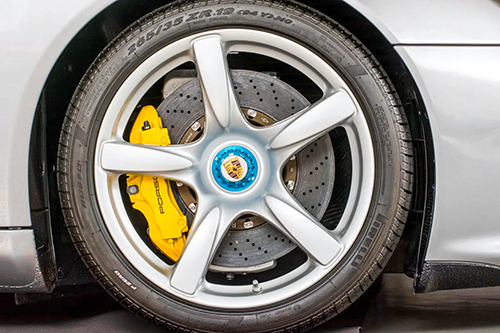 Some Cayenne models were fitted with the optional Ceramic Composite Brakes – the Turbo S model as standard. This option is typically associated with yellow brake calipers. During the PPI it’s important to be sure of the type of brakes fitted to the Cayenne you want to buy. If the car is fitted with the PCCB option and the brakes need to be replaced the cost will be between $10K and $20K.
Upside of having PCCB brakes:
- Massive weight savings
- Reduces rotational mass for better handling and ride
- Superior heat resistance
- Significantly longer lifespan – 100K miles possible
- Virtually no brake dust
The downsides of PCCB brakes:
- Very expensive replacement cost
- Slightly less initial bite when cold – not dangerous, just noticeable
- Susceptibility to chipping or damage if not handled correctly
Brake Booster Fault
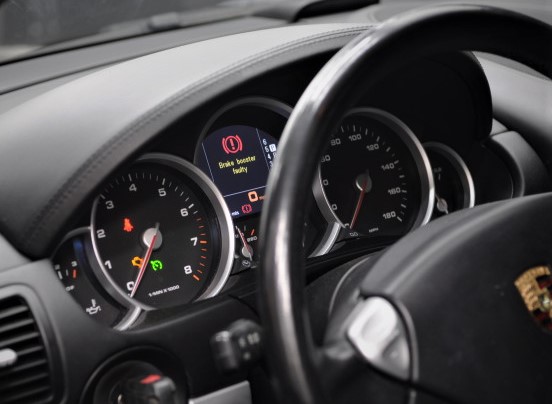 The 955 and 957 Cayenne commonly reports a brake booster fault. This is worrying as trying to stop the Cayenne without the assistance of the brake booster is no fun.
The Cayenne features a complex engine vacuum system that is driven by a pump. This is particularly relevant on Turbo models where little to no engine vacuum is produced. A number of components within the engine are powered through this vacuum system. The most common fault set through a failure in this system is that of the brake booster fault.
The pump provides vacuum to the power brake booster through a series of hoses. The level of vacuum is monitored through a sensor and a drop in vacuum can cause the sensor to report the fault to the dashboard. Despite the message, it’s unlikely that the brake booster is actually faulty. Typically the problem lies in a lack of vacuum to the booster as a result of a crack in one of the vacuum lines.
Cayenne Bodywork, Suspension, and Tires
Tailgate and Door Handle Issues
The tailgate on the 955 and 957 has a few issues that can be easily solved.
Tailgate wont stay open – this is probably the cheapest fix there is for the 955 or 957 Cayenne. The gas struts that hold the tailgate open weaken, and in cold weather in particular, you can find the tailgate dropping on your head easily! The fix is to replace the gas struts – simple job with parts sourced from online. Check the hood also stays up – same fix.
Rear wiper, tailgate locking, or license plate lights stop working – Each of these components can fail individually, however, a common cause of issues is the power supply too them. These components are connect through a wiring harness that passes from the tailgate to the body. Over time, the wires become fatigued and break where they are flexed with the opening and closing of the tailgate. Check the functionality of the tailgate systems thoroughly before you buy your Cayenne.
Door handles – sounds obvious, but check the opening, closing and locking of all the doors before you buy the 955 or 957 Cayenne. Individual door handles can break internally, and door locking mechanisms can also fail individually. If the Cayenne is fitted with KESSY, pay particular attention to the locking of individual doors and the behavior of the communication between the key and the car. KESSY problems can be more expensive to solve.
Cayenne Suspension Check Points
The Cayenne suspension is extremely durable and should not have any issues given the age of the vehicle. However, rubber bushings and struts can be worn with age or spirited driving. Listen for clunks or squeaks and check for fluid leaks from suspension struts. The most common issues are as follows:
Worn Control Arm Bushings
- Symptoms: Clunking noise over bumps, uneven tire wear, loose steering feel.
- Cause: Original rubber bushings degrade over time.
- Fix: Replace control arms or bushings.
Failed Lower Control Arms
- Symptoms: Clunking, instability under braking, poor alignment retention.
- Fix: Replace with OEM or upgraded units
Top Mounts / Strut Mounts
- Symptoms: Squeaking, clunking over bumps, poor ride quality.
- Fix: Replace top mounts.
Worn or Leaking Shocks or Struts
- Symptoms: Bouncy ride, nose dive when braking, poor cornering stability.
- Fix: Replace shocks or struts
Sway Bar End Links & Bushings
- Symptoms: Clunks or rattles during cornering.
- Fix: Replace worn end links or sway bar bushings.
Alignment & Ride Height Issues
- Symptoms: Pulling to one side, excessive inner tire wear.
Air Ride Suspension Issues
Many 955 and 957 Cayenne models were fitted with air ride suspension. The ride quality and performance is enhanced, however, the air ride suspension is less reliable than the standard suspension setup. Check thoroughly to understand what type of suspension is included on the model of Cayenne you intend to buy. Air ride suspension repairs can be expensive and the skills needed to correctly diagnose issues are not commonplace. More detail on the air ride suspension issues in our Cayenne common problems section and see our recommended Porsche repair shop list for more help.
PASM Suspension Option
The PASM (Porsche Active Suspension Management) system on the Cayenne is generally reliable but can present issues that are slightly different from the standard suspension system. In addition, if PASM is combined with air ride suspension issues can become more complex.
PASM Shock Failure
- Bouncy or overly firm ride
- One corner feels soft or collapsed
- Fluid / air leaks from the dampers
- Suspension noise over bumps
Height Sensor Failure
- PASM warning light on dash
- Car rides harshly or inconsistently
- Stored diagnostic codes
Intermittent PASM malfunction messages are often caused by water ingress.
Tire Wear and Age
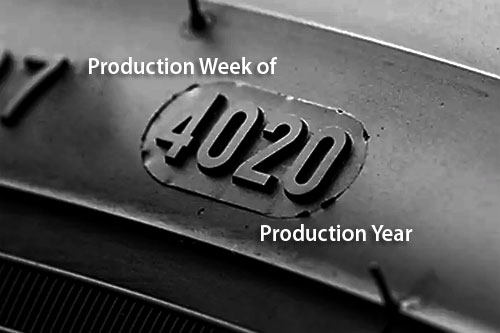 Uneven tire wear, especially on the inner rear shoulders, often points to worn rear control arms, poor toe setting, aggressive camber settings, and general poor alignment. Rear tires are expensive and an alignment issue will quickly degrade the tire. This should be revealed in the PPI.
Check tire DOT dates — anything over 5 years old should be replaced, even if tread looks good. Low-mileage cars often have old, degraded tires that can fail despite the minimal wear level. With a used Cayenne and low mileage, you will likely need new tires because of their age rather than because they are worn. Knowing the DOT date allows you to plan for when the tires will need to be replaced.
Cayenne Maintenance, Running Costs, Spare Parts, Repairs
Cayenne 955 and 957 Maintenance Service Schedule
Maintenance Neglect
The Cayenne has come in for some criticism in the used car market for it’s perceived poor reliability. Many of the reliability issues were solved with revised parts, however, many of the problems now associated with the early Cayenne are the result of maintenance neglect. The internet is awash with descriptions of how to reset the maintenance reminders on the Cayenne. This is useful if you have chosen to DIY the required maintenance and have completed the work. Unfortunately, it also makes skipping the maintenance as easy as resetting the indicator message.
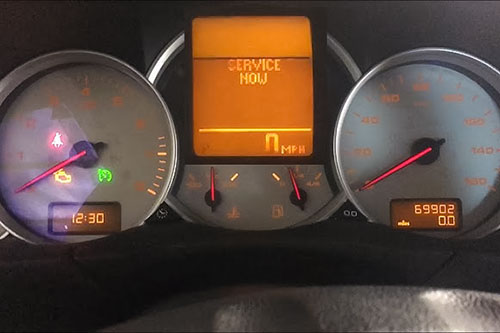 Maintenance Service Dash Messages
The Porsche Cayenne will display a variety of maintenance-related messages on the dash to remind you of service intervals. These appear in the central multifunction display and can vary depending on model year and the PCM (Porsche Communication Management). Check the service indications in the car you want to buy and scroll through the remaining time and mileage in the maintenance area. The guide should indicate the time to the next service and what type of service is due. There is a significant difference between the cost of an annual service and a major service interval every four years. Understanding what service is due next, what’s included in that service, and the cost of the maintenance interval, can help you plan for your ongoing ownership cost.
Get Serious About Cayenne Ownership
If you are serious about owning a 955 or 957 Cayenne, maintenance is critical. If you cannot determine the true history of maintenance on the Cayenne you wish to buy, budget to complete a full major service – this should be evident from a PPI and it’s reasonable to ask for an estimate to bring service up to date. For many early Cayenne models, the cost of a major service will be the equivalent of a substantial percentage of the purchase price. You might have to spend 50% of the purchase price again correcting maintenance.
Save 20% on Maintenance at a Porsche Repair Shop
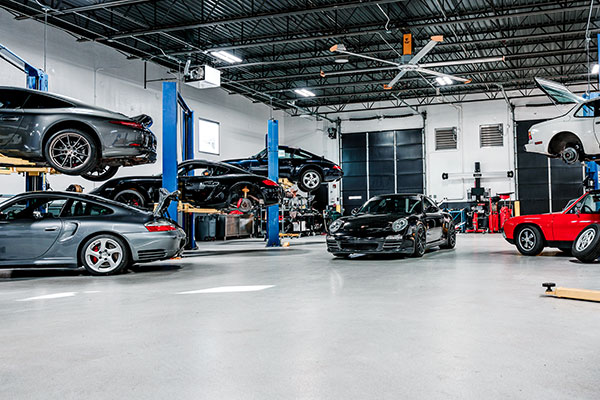 Many dealerships are limiting service to newer vehicles, often turning away Porsche models over 10 years old due to a lack of technicians trained in older cars and an increasing focus on EV cars. The original Cayenne models are not going to be over welcomed for service at the dealer.
Cayenne Running Costs
The first thing you have to do with almost any 955 or 957 Cayenne on the market today, is to be sure the maintenance is up to date. Often that’s not simple, so completing a full inspection and putting the Cayenne you buy into the best starting position with all maintenance freshly completed is the way to go.
With the maintenance up to date, create a maintenance plan based on inspections and the advice from a repair shop. We recommend you budget $120 a month for routine maintenance service, covering annual, intermediate, and major maintenance over four years. Plan extra for new tires and brakes based on mileage and condition.
Additional costs include repairs, insurance, and taxes. Repair costs can vary dramatically depending upon the issue that needs to be resolved, and typically work on the Cayenne is difficult and attracts more labor time with expensive parts. We suggest budgeting a further $80 per month to cover likely repairs over a four year period.
Transfer Case and Differential Maintenance
All 955 and 957 Cayenne models have aged enough to have past the initial transfer case and differential fluid maintenance point. Again, on many models this service has been neglected and often skipped. We recommend you complete these fluid changes as a priority if you have no tangible evidence that they have been completed in the recent past on the Cayenne you plan to buy.
955 and 957 Cayenne Parts Availability
Availability of spare parts for the Porsche Cayenne 955 and 957 is good. Porsche has supported the Cayenne well through its parts program. Many original parts were revised and reused on the later chassis. Many components are still in production or at least readily available through after-market suppliers via OEM manufacturers. Parts that are harder to find include interior trim components and sensors, headlights, and infotainment system replacement parts – many of these can be sourced through the used parts market.
The Buying Process
What to Look for When Buying a Cayenne
Pre-Purchase Inspection (PPI)
Once you’ve found a potential Cayenne, your first step should be a thorough inspection by a Porsche specialist. A pre-purchase inspection (PPI) can uncover hidden mechanical issues that aren’t obvious at a glance. It’s important to use a competent and experienced shop to perform the PPI. Providing the shop with any known repair or maintenance history on the car will help them with a detailed assessment. Even if the Cayenne is cheap, it’s still worth spending a few hundred dollars to get a thorough PPI.
Feedback From a Pre-Purchase Inspection
The inspection should uncover the details of the mechanical wear on the Cayenne and the general condition. What you also want to know from the report is what’s next. Before making the purchase, you want to know the extent of maintenance work needed on the car in the next few years. Use our maintenance guide for the Cayenne to map the history to your next maintenance steps. You also want to know the age and health of the battery and the DOT on the tires.
Fault Codes and Over-Revs
The PPI Should Check Fault Codes and Emissions Readiness
Before buying any car, it’s crucial to check when the OBD fault codes were last cleared and to verify the emissions monitor status. A seller can easily clear codes just before your test drive, which also resets the emissions monitors to “not ready.”
Since emissions tests require multiple drive cycles, hidden issues may not reappear for many miles. During a PPI the shop should confirm that the emissions system shows “ready” – this indicates the car has been driven enough since the last reset and isn’t hiding recent faults.
How Hard Has the Car Been Driven – Over-Revs
Revving an engine to the red line is safe and even healthy for Porsche engines when done correctly. A proper gear change at redline may briefly raise RPM slightly—this is normal and harmless. With the Cayenne transmission the potential for over-revving the engine through a manual transmission gear miss shift has been eliminated. High range over-revs are therefore extremely rare.
Recorded Events
Fortunately, Porsche’s engine management system logs key data, including engine over-rev events. The ECU permanently records engine hours and when these events occurred.
There are six over-rev levels, from minor redline hits to extreme, potentially engine-damaging RPM spikes. Lower-level events often just show spirited driving, but higher-level over-revs may indicate serious stress and events that could shorten the engine life. During a PPI you want to know what over-rev details are recorded in the ECU – the Cayenne should never have events above level 2 recorded.
Check for Completed Recalls
Specific models and production ranges of those models can require repairs under manufacturer recalls. It’s worth checking to make sure that the pre-owned Porsche you plan to buy is up to date with the recalls required on the specific model. You can do this most effectively with:
National Highway Traffic Safety Administration
or directly with Porsche:
Build Sheet, Window Stickers, Options
The original build sheet for the Cayenne you are interested to buy will tell you what was included during production. Understanding the actual build and options included with the Cayenne can give you an accurate picture of the relevant value to other cars for sale. Many options included with the car are not easy to determine visually without the help of the original build sheet. Most of the options on the car will be described using acronyms or abbreviations. The better informed you are and better understanding of exactly how the car was built, gives you the very best information you need to plan for maintenance and repairs in the future.
For example – it comes with pretty yellow calipers. Typically that means PCCB and a very expensive brake job in the future! Look for highly desirable options that maintain value such as PASM, Sport Chrono, PSE, etc.
If you find a helpful and willing person at a Porsche dealer, using some charm you may be able to persuade them to provide you with a copy of the build sheet and window sticker for the car you plan to buy. The seller should provide this information to backup their claims of the vehicle for sale. If all else fails, try an online resource such as Vin Analytics
Why Is the Car for Sale?
There are often very genuine reasons why a car is for sale. We all move on, however, older cars are often put up for sale when mechanical issues are deemed too expensive. Dig deep and if possible, understand why the car is for sale.
Who Is Selling the Car?
If you’re buying from a used car dealer, find out where they sourced the Cayenne. A Porsche-focused dealer is a good sign. But if the dealer typically sells budget minivans, proceed with caution. Who trades in a Porsche at a used car lot that doesn’t specialize in them? Often, it’s someone offloading a car with hidden issues, betting the dealer won’t notice. Do your homework. Older Cayenne models are likely to appear at general used car dealers. Typically, they wont really understand what they have in their possession – your job is to find out if they have a great car for sale or if the Cayenne is one they are just blissfully unaware of potential issues. After reading this guide, you’ll often know way more than the seller – that’s a good thing!
Actual Production Date – Sticker On Driver’s Door
Most cars are advertised using the model year or registration year. This can be misleading. The production year runs August through July. That means cars produced in August through December are described as the following year’s production e.g. September 2001 production is often called a 2002 model year car.
Why Does This Matter?
The answer is parts, recalls, updates, and real value. The actual production date is critical to understand the likely components fitted on the car. In the Cayenne case, the recalls and campaigns happened in a specific production window. Knowing the actual production date for the Cayenne you plan to buy can help you determine the real value of the car and the potential for issues.
Mileage Covered
10K miles per year is considered good condition for most cars. The Cayenne is an everyday use SUV, so higher mileage is to be expected. What’s important to discover is how the maintenance for the Cayenne changed over the mileage covered and its frequency – that will likely tell you more about the health of the car versus the total mileage covered. Pay particular attention to the maintenance history on the transmission and all wheel drive transfer case.
What Type of Mileage
High speed freeway driving versus around town local driving can have a serious influence on the overall engine and transmission condition. Long drives at higher speeds tend to produce less wear as opposed to lots of cold starts and short journeys. Look at the location of the owners and make a judgement based on the mileage recorded over the time the owner used the car. Higher mileage recorded over a shorter time is not necessarily a bad sign – this suggests less start/stop short journeys and longer individual trips – potentially healthier than low mileage.
Low Mileage Garage Queen – Not So Fast!
While low mileage on a Cayenne is very appealing, it can come with its own set of issues. Infrequent use often means missed service intervals, leading to age-related wear in fluids, seals, tires, and brakes. Lack of maintenance based on time is risky. For example, spark plugs should be replaced every 10 years, regardless of mileage, and brake fluid flushed every 2–3 years. Tires too may have good remaining tread but can still be unsafe if over 5 years old.
Low-mileage cars often demand a premium, but be sure to budget for catch-up maintenance after your purchase. Pay particular attention to the transmission maintenance performed and all wheel drive transfer case maintenance.
Number of Owners
For most Porsche cars, the number of previous owners matters less than the car’s maintenance history and overall condition. What really matters is how long each owner had the car and how well they took care of it. If you see an increasing number of owners over a decreasing amount of time, that may well be a sign of neglect. You are likely to see a good maintenance history during the initial ownership period, followed by an increase in the number of owners and a decrease in the amount of maintenance performed.
Title Status, Accident History
There are several good ways to check the title status on a vehicle available. All you need is the vin number.
- National Motor Vehicle Title Information System (NMVTIS) – Government-backed, very reliable
- Carfax – Detailed history reports
- AutoCheck – Similar to Carfax
- VINCheck (NICB) – Free check for theft/salvage
Geographic Ownership History
Understanding where the car has been in the country can give you some clues as to its history of use. Cars in the south are likely to have been driven regularly as the weather does not preclude the enjoyment of the Cayenne. However, cars in northern states are often subjected to more road chemicals and more harsh conditions. Climate too can be a factor. Hot and dry versus high humidity has different effects on the health of rubber components, fluids, and interior trim for example.
Porsche Cayenne Years to Avoid
This is a common question and not one that is easily answered. All Cayenne model year production has some potential for issues that you should pay close attention to. The earlier production Cayenne has definitely experienced more problems, but most were fixed under warranty, recalls, or revised parts. There really isn’t a production year to avoid at all – more important is understanding the maintenance and repair history of the Cayenne in question. For sure, the Cayenne improved with age, so later models are significantly more desirable.
Buying Out of State or From Distance
As luck would have it, the Porsche you really want is on the other side of the country! This used to be an issue, but these days buying cars out of state is commonplace. There are technology based tools to enable a smooth transaction and help minimize the risks, and excellent ways to transport you car home.
Tips for Buying a Porsche Out of State
- Start with a thorough online evaluation
- Get detailed photos: exterior, interior, engine bay, undercarriage, and tires.
- Request a walkaround or live video call (FaceTime or Zoom) to confirm condition.
- Run a VIN check
- Use Carfax, AutoCheck, or VinAudit to check for accidents, title issues, maintenance history etc.
- Get an option list or build sheet using a vin decoder
- Use an escrow service for the transaction
- Insure the car before transport to you
Transporting the Car – Recommended Car Carriers
Some buyers like to fly in, put their hands on the car, complete the transaction and drive home. In many cases this is not practical, and so buyers turn to shipping companies to transport their new purchase directly to their home. If you’re buying from a Porsche sales specialist, they will likely have an option and can recommend a car shipping company they typically work with. Here are some shipping companies that we have worked with that offer excellent service:
Find a Local Porsche Repair Shop For Support
Recommended Porsche Repair Shops You Can Trust

Ownership and Driving Experience
What to Expect and How to Care For Your Cayenne
What it's Like to Live With a 955 or 957 Cayenne
 All versions of the Cayenne are easy to drive, park, and have fun in everyday. Owning a Cayenne feels less like having a family SUV and more like owning a cross between a Porsche sportscar and a German tank. The Cayenne is generally well-built, and comfortable, yet gives you that built like a tank feel on the road while moving along quite quickly. You’ll find it easy to drive on the morning commute and reassuring when the rain or snow hits on your journey home.
Porsche is a luxury brand, so while you have the brand experience, don’t be surprised when maintenance and repair costs reflect the same level of luxury. The Cayenne requires more expensive maintenance than many of it’s competitors and the more timely the maintenance, the better the Cayenne performs in the long run.
Cayenne Everyday Experience
- Comfort – The Cayenne is comfortable and practical for daily use. With optional PASM (standard on some models), it rides well even over broken pavement and is quite forgiving. Optional air-ride suspension makes the ride even smoother for long journeys, and changing to a sport mode provides the tight sportscar feel you’d want from a Porsche.
- Interior – A little dated, minimalist, and high-quality. Good solid upscale materials that last well with the exception of the buttons.
- Space – The Cayenne has enough room to fulfill the SUV requirement. However, the rear seats are little tight on leg room for long journeys. The cargo area is practical for most things, but the sloped hatch limits tall items. Two sets of golf clubs can be done and rear seats do fold and split if extra space is needed.
- Infotainment – The PCM is very dated and renown for issues. Later models are slightly better but it’s probably best to have low expectations for the infotainment system.
Performance & Driving Feel
- Driver Interaction – The Cayenne talks to you and feels good on the road. The steering is tight and well-weighted and the overall feel is stable, planted, and sharp to respond to input. Cornering feels balanced and you can be confident of keeping your foot in through twisty turns.
- Performance – The base 3.2L VR6 is OK around town, however, for real power the Turbo model performs at very track competitive levels. The S and GTS V8 models have good throttle response and are more than fast enough for the practicality of getting home quick after a weekend away.
- Interior Noise – Porsche added extra sound deadening to the Cayenne on the later models. The difference is negligible. The cabin is quiet enough to still enable the awkward silence if you’d like one.
- Exhaust and Engine Tone – The engine and exhaust tones from the Cayenne are a quiet balance between sports car and family SUV. The 3.2L VR6 always sounds a little louder while you push it, but the V8 models have an excellent deep powerful sound. The exhaust is refined and just enough to be recognizable as a performance car.
- Fuel Consumption – It’s an ICE Porsche – do you care? Well, if you do, 10 through 15 miles per gallon is the likely landing spot. That’s representative of a sporty SUV that is designed to be driven and enjoyed. You can get the Turbo model down to single digit miles per gallon real easy if you try!
Efficient Maintenance Service
 Cayenne Recommended Maintenance Intervals
Maintenance on the Cayenne is due annually, with an intermediate service at 2 years or 20K miles, and a major service at 4 years or 40K miles. The annual inspection on the older Cayenne is critical to help determine the ongoing health of the car and help you plan for repairs.
Recommended Porsche Repair Shops
Save 20% on Maintenance Service and Repairs
Interior Expectations and Infotainment
955 Cayenne (2003–2006)
Dashboard & Center Console
- Heavy use of buttons that wear easily
- Center console stack can look busy and button heavy
- Small, monochrome screen on car without navigation
- Optional PCM 2.1 navigation is slow and outdated today
Interior Materials
- Leather quality was good on most models and better on higher trims
- Lower base models have more plastic which can scratch easily
- Woods and aluminum trim is good quality
Seating
- Comfortable, firm German style seats
- Good on long journeys
- Leather now beginning to age especially on bolster areas
Cargo Space
- Generous size and practical for most situations
- 60/40 rear seat split and fully flat folding seats increase the cargo size
957 Cayenne (2008–2010) Improvements
- Center console stack redesigned
- PCM 3.0 with full-color touchscreen
- Better integration for phone + audio
- Buttons layout more logical
- Updated HVAC controls
- Optional rear-seat entertainment
Interior Materials
- Improved soft-touch plastics less prone to scratch
- More options for leather, alcantara, and trims – wood, carbon, and aluminum
Seating
- Additional options such as more adjustability and ventilation
Tire Management
The Cayenne uses Porsche N rated tires designed toward the performance end of the wear spectrum. If the car you buy has 19 or 20 inch rims, you’ll be looking at more than $1500 for a set of 4 tires. The rear tires will wear slightly more quickly than the fronts on the Cayenne due to more drive being sent to the rear wheels. You probably wont get as much mileage from a set as tires as you would imagine. The Cayenne is heavy and capable of handling faster turns from a suspension matched to performance rated tires – the net result is typically a faster wear pattern.
It’s also important to stay on top of vehicle alignment – any loss of alignment will eat the inner shoulder of the rear tires or cause unusual wear patterns on the front tires. A thorough PPI should determine the wear pattern on the tires and provide some insight into the current alignment.
Used Parts Market
The used parts market represents and excellent source for parts that are harder to find such as interior trim components, cabriolet motors and sensors, headlights, and infotainment system replacements. A quick search reveals many items for sale including things like complete rear seats, door panels, etc.
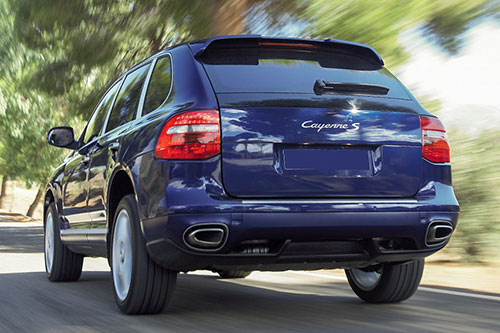 The Porsche Cayenne 955 / 957 We Would Buy
The Cayenne is a great choice for everyday Porsche motoring when you need something larger than a coupe. The Cayenne is comfortable enough for longer road trips, safe and practical for the commute to the office, and good in rough weather. Four adults works in the Cayenne and while cargo space is practical for everyday, picking up large supplies at the local DIY store is not really an option.
The most desirable Cayenne models are the 957 GTS and Turbo. These cars top the HP range of the Cayenne and are sporty, refined, and usually fitted with the best options. Turbo models are harder to find and command a premium price but also come with significantly higher ownership costs. The 955 and 957 Cayenne have depreciated to their lowest value point, so if you find a good one, you can get a lot of Porsche for easy money.
 Cayenne GTS With Options is Our Pick
The early Cayenne is a bargain – if you can find a lower mileage early S model with good service history and all the fixes completed, it’s a great buy. Our pick would be a Cayenne GTS in a strong color with all the options fitted. The GTS comes with everything you want from the more expensive Turbo model at a lower cost and with less of the turbo maintenance issues. The tuned V8 engine and lower suspension makes the GTS a lot of fun.
No matter the model you choose, the Porsche Cayenne is still a game changer. All models offer a great balance between, performance, everyday usability, exceptional handling, and the chance to flaunt the Porsche badge. All models have good interior quality, and sharper styling than most of the competitors. Careful research can get you a great car at a super low cost.
 Maintenance Neglect is Your Biggest Concern
On going maintenance and repair work on the older Cayenne models is still expensive and demanding. Many older models have been seriously neglected or maintained at shops that don’t have a clear understanding of the particular demands of maintaining a Cayenne. Finding a good one isn’t easy, however, with a little TLC, some investment, and some expert advice, the older Cayenne is great car to own – and you can build an off road version if you want.
- Best bargain – 2006 low mileage Cayenne S
- Best long-term value model – 2010 low mileage Cayenne GTS
- Best driver – low mileage Cayenne Turbo with options
- Maybe Collector – 2010 low mileage Turbo S model