
Porsche Panamera Buyers Guide 2017 – 2024
Practical Expert Advice to Help You Successfully
Buy a Porsche Panamera 2017 – 2024 | 971
 Porsche Panamera 971 Buying Guide
The second generation Porsche Panamera arrived in the 2017 model year. Significantly updated, the luxury sedan developed it’s own identity with exterior changes that give a more sporty and aggressive look. The Panamera 971 is exhilarating to drive and is a practical 4 door sedan. The 971 Panamera is longer, wider, and taller than the previous generation, and also includes a pretty estate or station wagon version.
Pretty, Luxury Porsche Sedan
The Porsche Panamera 971 is a sumptuous blend of leather, cockpit style design, and is packed with screens and technology. Outside, changes to the rear end make a significant difference to it’s appeal.
 How This Panamera Guide Can Help You
This guide will help you avoid costly mistakes and common pitfalls with a used Panamera 971. We skip the fluff and focus on what truly matters – mechanical concerns, known issues, realistic ownership costs, ongoing maintenance, and expert tips to help you find a worthwhile Panamera.
Be Aware of What You’re Getting Into
 Understanding Your Cayenne Buying Goals
Having a good sense of why you want to own a used Porsche Panamera makes ownership free and easy. We think the 971 Panamera works best for:
- Luxury family sedan
- Long road trip cruiser
- Cargo capacity for grocery runs to weekend get aways
- Hybrid option
We don’t think it works so well:
- Low cost maintenance and repairs
- Lost value – quick depreciation
- Expensive hybrid repair costs
 Plan For Maintenance Before You Buy Your Panamera
Like any used car, the Panamera has a few items that you need to pay attention to. The most important consideration is performing consistent and accurate maintenance on the Panamera. Without the right maintenance service, the Panamera can have PDK transmission issues, and transfer case problems on all wheel drive models. As discussed later, PDK maintenance is critical to avoid problems – being forced to replace the PDK is north of $20K! PDK repairs for the Panamera require special skills that are in short supply.
 Panamera Buyers Quick Check List
Before you buy any car, there are a series of questions that you need answers to. See the section “What to look for when buying” below for more detail.
- Why is the car for sale?
- Who is selling the car?
- Actual production date – sticker on driver’s door
- Mileage, maintenance, and repair history
- Number of owners
- Title status: Clean / salvage / rebuilt / other
- Accident history (check Carfax or AutoCheck)
- Service records available
- Geographic ownership history (climate matters: dry vs humid areas)
The sections below open to provide more detail. Select a topic that you want more detailed information on.
Porsche Panamera Brief History – What We Know So far
What We Know About the Panamera So Far
 The Porsche Panamera was first seen in 2009 and went on sale in the USA for model year 2010. As an everyday 4 door sedan, the Porsche Panamera can be quite fun. The Turbo S model delivers over 600hp and reaches 60mph in 3.0 seconds – not too shabby if you’re late for a business meeting or need to rush to the local take out restaurant for a pickup.
As a front-engine, four-passenger, four-door luxury sedan with liftgate, the Panamera set a different direction versus Porsche’s historically lightweight two-door, rear-engine sports cars. The original Panamera came in for some criticism – it looks like a stretched 911, awkward in shape, and lacking it’s own identity. The second version (971) changed the looks and created more of a unique identity for the Panamera. The 971 Porsche Panamera is available with V6 twin turbo charged engines in standard models and higher spec V8 twin turbocharged engines in the GTS and Turbo models. Porsche also matched the hybrid system to the V6 and V8 engines creating a twin turbo charged V8 with hybrid power. A brief flirt with diesel versions was quickly stopped after the infamous diesel gate scandal.
The Porsche Panamera 971 chassis continued until 2024 with a mid-production facelift in 2021 designed to address some of the issues. The 2021 facelift further enhanced the looks of the Panamera and brought the rear end in line with the 992 911.
Panamera Maintenance and Repair Support
Porsche Panamera Sports Car Technology
The Porsche Panamera comes loaded with technology designed to produce a luxurious ride combined with the nimble and responsive nature of a sports car. Adaptive air suspension, Porsche Dynamic Chassis Control (PDCC), rear wheel steering, ACC and ADAS, active anti-roll bars and the Porsche Active Suspension Management (PASM), all contribute to an outstanding ride for such a heavy car. A speed activated rear spoiler and 8-speed PDK dual clutch transmission round out the performance technology.
Panamera Goes Hybrid
Porsche introduced the original S Hybrid Panamera model in 2011. With the launch of the 971 version, Porsche updated the hybrid system and expanded its range. The Panamera S E-Hybrid uses a V6 engine along with an electric motor coupled with the revised 8-speed PDK transmission. In 2018, Porsche unveiled the Panamera Turbo S E-Hybrid. The Turbo S E-Hybrid has the 4.0 L V8 engine from the Panamera Turbo, but is also be paired with an electric motor. The result is a monster and the third most powerful Porsche ever produced with more than 680HP!
971 Production Ends 2024
Porsche closed off production of the Panamera 971 version in 2024 with over 250K models sold worldwide – sales in the USA represented approximately 40K of the total worldwide production.
Panamera 971 versus 970 - what's new
The 971 Panamera was launched in 2017 and significantly updated the original version. The 971 Panamera included changes such as:
- Longer, wider, and lower stance – significantly more elegant and coupe-like profile.
- Fastback rear with integrated active spoiler – much more refined look.
- New MSB chassis developed with Bentley – lighter, stiffer, improved weight distribution.
- Feels more balanced, especially with rear-axle steering.
- Improved ride comfort with three-chamber air suspension.
- Longer wheelbase with more rear legroom.
- Faster 8-speed PDK transmission.
- Electric power steering with rear-axle steering on higher trims.
- Downsized, more efficient turbocharged V6 and V8 engine lineup.
- 4.0L twin-turbo V8 replaces previous 4.8L.
- Expanded E-Hybrid range with bigger electric motors and usable EV range.
- 12.3″ Porsche Communication Management (PCM) screen.
- Interior includes touch panels, fewer buttons, larger screens.
- Digital and analog dashboard display mix.
- Advanced ADAS with adaptive cruise, lane keeping, night vision, and InnoDrive.
- Better integration with Apple CarPlay and online services.
- Sport Turismo version adds estate or shooting brake model option.
Panamera 971 versus facelift 971.2
The 971.2 Panamera facelift was introduced in 2021 and continued through to the end of production in 2024. The 971.2 Panamera facelift introduced a more modern silhouette and sharper styling:
- Sharper front bumper with larger air intakes.
- Tweaked rear light strip — continuous light bar look like 911 models.
- Revised wheel designs, trim, and colors.
- Turbo S introduced with more power – replacing regular Turbo.
- No S model RWD – only S model is all wheel drive.
- GTS power bumped to 480 hp.
- Base model switched to updated 2.9L V6 engine
- E-Hybrids upgraded with larger batteries and increased EV range.
- Improved efficiency and lower emissions tuning across lineup.
- Retuned suspension for sharper handling and improved ride comfort.
- Upgraded Porsche Dynamic Chassis Control Sport mode.
- Ceramic Composite Brakes (PCCB) became standard on Turbo S.
- Updated PCM software with better connectivity and faster processor.
- Wireless Apple CarPlay and Android Auto.
- More ADAS options.
- Subtle material and interior trim upgrades.
- New steering wheel design.
- Slightly refined interior touch controls.
Porsche Panamera 971 Reputation
 Owners of the 971 Panamera praise the car for its sporty handling, powerful engines, and comfort – it does look, feel, and perform like a Porsche. The interior is sumptuous, loaded with technology, and delivers a cockpit style feel with a smooth ride quality. The Sport Turismo version is probably the prettiest with the rear roof line in some ways a better statement than the standard version. The Panamera 971 does require expensive and timely maintenance to maintain it’s reputation as solid, practical, and fun to own. There are vulnerabilities and the potential for expensive issues with the all wheel drive transfer case and the PDK transmission. The technology too makes for potential issues that have not been seen before.
High Depreciation and Niggles
Depreciation in value of the Panamera can be steep and there is limited market appeal. Many people are concerned with reports of PCM screen glitches, navigation forgetting recent destinations, and seemingly random reboots of certain electrical systems. Early 971 models had issues with rear anti-roll bar links that resulted in a recall. The PDK transmission is generally strong, but there are reports of rough or delayed shifts under certain conditions, and maintenance is required more frequently than planned. ADAS systems are expensive to repair or replace.
In general the 971 Panamera is a fabulous car – you will need to spend money to maintain and repair any issues. So, at this time, CPO cars and extended factory warranty are a great option for the best ownership experience.
What People Like About the 971 Panamera
Driving Dynamics and Feel
- Consistently praised for feeling more like a sports car than a large sedan.
- Great chassis that corners flat, with precise steering.
- Easy for long journeys – will cruise effortlessly all day long above the speed limit!
- Very comfortable ride with upgraded air-ride suspension.
Build Quality & Interior
- High quality interior materials, fit-and-finish, combined with solid construction.
- Premium feel interior with low noise and few rattles.
- Ambient lighting, various driver assist features, sporty yet elegant interior touches.
- Seats are firm and comfortable for long-distance drives.
- Doors shut with a solid thud and quality sound.
- PCM infotainment is advanced and intuitive.
Performance
- The V8 models deliver a robust, solid power feeling.
- V6 models are considered solid for daily use.
- Quick acceleration for size – Turbo model is awesome!
- Transmission is smooth with quick gear changes.
- All wheel drive version provides confident performance in bad weather.
Practicality
- AWD system with Porsche Traction Management is regarded as very capable in snow and rough weather conditions.
- Large rear cargo space, wide-opening tailgate, and roof rack options make it handy for family trips.
- Sport Turismo version adds more room and practicality.
Value
- High depreciation makes initial investment lower than some competitors.
What's Not to Like About the 971 Panamera
- Fuel economy – real world mpg is significantly less than tested – V8 models especially.
- Maintenance costs – Porsche service come with a luxury price tag.
- Expensive repairs – Cooling system, suspension, and transmission repairs are expensive.
- Transmission faults – maintenance required more frequently than recommended.
- Excessive brake wear – heavy sedan and soft powerful brakes equals quick wear.
- Rear spoiler failure is expensive.
- Hybrid economy is not as good as claimed in the real world.
- Expensive transfer case repairs.
- High value depreciation rates.
Panamera Hybrid
 The 971 Panamera comes in three flavors of plug in hybrid. The Panamera 4 E-Hybrid with 2.9L twin turbo V6, the 4S with the same engine and all wheel drive, and the monster Turbo S E-hybrid with a 4.0L twin turbocharged V8 making up to 690HP! In general, EV only mode range has been improving as the Panamera Hybrid evolved – in the real world 12 to 20 miles of EV range is likely.
Problems with the hybrid system are expensive to repair and battery replacement can represent a good percentage of the value of the car. Common issues on the hybrid include:
- As with most plug-in hybrids, the high-voltage hybrid battery loses capacity over time, reducing EV-only range.
- Battery warranty was extended to 8 years in most markets, so many 971 hybrid models are reaching the out of battery warranty time. Once out of warranty, battery failure or major degradation can be a very expensive repair.
- Problems with the charger, sometimes related to connectors or charging electronics not working properly have been reported as ongoing issues.
- High-voltage controller defects are less common now, however replacement parts are expensive and often do not always solve ongoing issues.
- Hybrid components, sensors, cooling for electric systems, add complexity and potentially higher repair costs compared with non-hybrid versions.
- Proprietary parts and systems require dealer repair, and costs can be very high, especially for battery or electric motor issues.
- In the real-world EV range is lower than official specs, especially after some years of use, or in cold weather or after aggressive driving. As a result of the extra weight, fuel consumption can be quite high when the battery is depleted on a hybrid model.
We live in a world where speaking the truth is often considered “offensive.” So, do we dare criticize the attempt to save fuel, go greener, and be more efficient? Yes, frankly, the 971 hybrid version of the Porsche Panamera as a used car is financially a significant risk and one that we recommend you avoid. The hybrid is a great choice provided you have extended battery warranty, CPO warranty, or remaining or extended factory warranty. In plain terms, what you gain financially through hybrid drive will be lost once you need to replace the battery.
Shooting-Brake Estate Variant - Sport Turismo
 The Panamera 971 Sport Turismo is a compelling version of the Panamera designed for anyone who wants more utility space without giving up performance. If you like the idea of something between a sedan and wagon, with the prestige, luxury, and the speed of a Panamera, but not the size of an SUV, then the Sport Turismo is for you. We think it’s the best looking Panamera.
Some of the advantages of the Sport Turismo over the standard Panamera sedan body include:
- The hatch and roofline give much more usable rear cargo space and easier loading. Fold-down seats give even more versatility for larger items.
- You get almost all of the performance and luxury of the sedan versions, but with more flexibility for luggage, “stuff”, and occasional larger items.
- The look is appealing and unique – the wagon hatchback styling is very distinctive.
- Some versions allow a middle rear seat or bench, increasing the rear seating capacity for short trips or child seats.
Long-wheelbase Executive Model
 The Executive model Panamera is a specially extended version of Panamera models. The Executive Panamera features a stretched wheelbase approximately 6 inches longer than the standard model. The designed is primarily focused on rear seat space and luxury.
The Panamera 971 Executive model version offers the luxury and sport of a Panamera with significantly enhanced rear-seat comfort and exclusivity. The Executive version is ideal for drivers who frequently carry passengers or appreciate a more limousine like experience. Interior upgrades include two individual rear bucket seats, a center console with extra storage, and enhanced comfort features like heated, multi-way, adjustable rear seats, aircraft style tray tables, and rear seat entertainment.
Extensive Knowledge Available For Maintenance and Repairs
A thorough PPI and some historical research into the Panamera you want to buy should reveal the details of the maintenance history. Pay special attention to the transmission service history and the maintenance or repair of the transfer case on all wheel drive models.
Acronyms, Abbreviations, and Model Options
Porsche offers a wide range of build options that allow buyers to customize nearly every aspect of their vehicle, from performance upgrades and wheel designs to interior trims and driver-assistance systems. Options and performance technology typically attract an acronym! So, it’s easy to get lost between your PSM, PDCC or PADM when shopping for a used car. In our acronym and options section we list and explain the most common acronyms you’re likely to see when shopping for a used Panamera.
Most vehicles in the USA are not factory ordered by the original owner and typically configured with less available options. Some options were included as a basic requirement for specific market trims. When shopping and comparing prices on a used Panamera, check the installed options thoroughly. Some options, for example PASM, PSE, or Sport Chrono can add significant value to the car in question.
These are the build options for the 971 Panamera range:
Exterior Options
- Paint-to-Sample (PTS) – Special-order Porsche colors.
- Wheels – Multiple designs, sizes from 18 inch to 21 inch.
- Roof options – Standard steel roof, tilt/slide sunroof.
- Full panoramic roof.
- Roof rails black, silver, or deleted.
- Matrix LED headlights.
- Privacy glass / heat-insulating glass.
- Sport design package
Interior Comfort & Luxury
- 14-way power adjustable seats
- Adaptive sport seats.
- Upholstery – Leatherette, smooth leather, natural leather, Alcantara.
- Heated seats front & rear.
- Ventilated seats.
- Memory package – linked to key settings – KESSY..
- Steering wheel options – standard, multifunction, or wood/carbon/aluminum trim.
- Interior trim – painted, wood veneer, aluminum, or carbon fiber.
- Bose audio system or later Burmester.
- Rear-seat entertainment system.
- White instrument dials
Technology & Infotainment
- PCM – larger more modern navigation – CarPlay.
- CD changer / DVD navigation.
- Phone module / Bluetooth.
- ParkAssist.
- Rear-view camera
Chassis, Performance & Handling
- Air suspension (PASM) – Adjustable ride height + damping.
- PDCC (Porsche Dynamic Chassis Control) – Active anti-roll bars.
- SportDesign package – Aero kit, side skirts, unique bumpers.
- Sport exhaust – PSE.
- PCCB – ceramic brakes.
- Rear axle steering
- PTV+
Pricing, Market Trends - Buying Resources
Pre-Owned Panamera Market Summary - 2017 thru 2024
- Approximately $20K spread between 2017 and 2019 model types.
- Approximately $30K spread between 2019 and 2023 model types.
- Late base models depreciate by 50%.
- Turbo, GTS, and Sport Turismo models depreciate less quickly.
- Watch out for neglected high-mileage examples on the market.
- Good well maintained models should be CPO.
- Base V6 models are simple, less powerful, generally more reliable, and cheaper to maintain.
- Hybrid models offer great performance, but have higher risk for big-ticket repairs.
- Turbo S models are starting to climb in value with E-Hybrid Turbo S above $150K.
- Overall market prices are stable after initial depreciation.
Panamera 971 Pricing & Market Trends as of 2025
The 971 Panamera models are not yet at the bottom of the curve for depreciation – expect to loose some value for resale and the later the model the greater the depreciation. Prices are very much conditional upon mileage covered, repair history, and maintenance history. Buy the best-maintained one you can find and expect to pay more for CPO and extended factory warranty. This is the average used price per model across the production years 2017 through 2024:
2017 Model Year
- Base Panamera: Approximately $30,983 to $55,995
- Panamera 4: Approximately $32,000 to $57,000
- Panamera 4S: Approximately $45,000 to $70,000
- Panamera Turbo: Approximately $60,000 to $90,000
- Panamera 4 E-Hybrid: Approximately $50,000 to $75,000
- Panamera GTS: Approximately $70,000 to $100,000
- Panamera Turbo S: Approximately $85,000 to $120,000
2018 Model Year
- Base Panamera: Approximately $36,985 to $59,990
- Panamera 4: Approximately $38,000 to $60,000
- Panamera 4S: Approximately $50,000 to $75,000
- Panamera Turbo: Approximately $65,000 to $95,000
- Panamera 4 E-Hybrid: Approximately $55,000 to $80,000
- Panamera GTS: Approximately $75,000 to $105,000
- Panamera Turbo S: Approximately $90,000 to $125,000
2019 Model Year
- Base Panamera: Approximately $37,973 to $47,433
- Panamera 4: Approximately $39,000 to $50,000
- Panamera 4S: Approximately $52,000 to $70,000
- Panamera Turbo: Approximately $68,000 to $95,000
- Panamera 4 E-Hybrid: Approximately $58,000 to $85,000
- Panamera GTS: Approximately $78,000 to $110,000
- Panamera Turbo S: Approximately $95,000 to $130,000
2020 Model Year
- Base Panamera: Approximately $48,500 to $83,491
- Panamera 4: Approximately $50,000 to $85,000
- Panamera 4S: Approximately $60,000 to $90,000
- Panamera Turbo: Approximately $75,000 to $110,000
- Panamera 4 E-Hybrid: Approximately $65,000 to $95,000
- Panamera GTS: Approximately $85,000 to $120,000
- Panamera Turbo S: Approximately $100,000 to $135,000
2021 Model Year
- Base Panamera: Approximately $42,991 to $66,900
- Panamera 4: Approximately $45,000 to $70,000
- Panamera 4S: Approximately $55,000 to $85,000
- Panamera Turbo: Approximately $70,000 to $105,000
- Panamera 4 E-Hybrid: Approximately $60,000 to $90,000
- Panamera GTS: Approximately $80,000 to $115,000
- Panamera Turbo S: Approximately $95,000 to $130,000
2022 Model Year
- Base Panamera: Approximately $63,991 to $98,288
- Panamera 4: Approximately $65,000 to $100,000
- Panamera 4S: Approximately $75,000 to $110,000
- Panamera Turbo: Approximately $90,000 to $125,000
- Panamera 4 E-Hybrid: Approximately $80,000 to $115,000
- Panamera GTS: Approximately $100,000 to $135,000
- Panamera Turbo S: Approximately $115,000 to $150,000
2023 Model Year
- Base Panamera: Approximately $77,800 to $120,900
- Panamera 4: Approximately $80,000 to $125,000
- Panamera 4S: Approximately $90,000 to $130,000
- Panamera Turbo: Approximately $110,000 to $150,000
- Panamera 4 E-Hybrid: Approximately $95,000 to $135,000
- Panamera GTS: Approximately $120,000 to $160,000
- Panamera Turbo S: Approximately $135,000 to $175,000
2024 Model Year
- Base Panamera: Approximately $97,518 to $110,999
- Panamera 4: Approximately $100,000 to $115,000
- Panamera 4S: Approximately $110,000 to $130,000
- Panamera Turbo: Approximately $125,000 to $145,000
- Panamera 4 E-Hybrid: Approximately $115,000 to $135,000
- Panamera GTS: Approximately $130,000 to $160,000
- Panamera Turbo S: Approximately $145,000 to $175,000
How Rare are the 971 Panamera Models
Introduced in the USA in 2010, the Panamera has always been one of the lowest sales totals of the Porsche range. Porsche sold approximately 42K models in the USA during the 971 Panamera production run – averaging around 5.5k models per year. Once you start to delve into the market in detail, and the model specifics, you find some models are quite rare.
Sourcing A Quality 971 Panamera
Most of the good and certainly the rare examples of the 971 Panamera, such as the Turbo S, are going to end up at a Porsche sales specialist we list on our resource page or as CPO cars at the dealerships. These cars will attract a premium price, might be on consignment sale, or at a quality auction site if and when they become available.
You might be lucky. Sometimes, you’ll find an excellent example or a diamond in the rough in an unusual spot. Nobody is going to sell a Porsche cheap, unless 1) they incorrectly perceive problems with the car or 2) there are real problems with the car or 3) they have no clue! Your job is always to be better informed than the seller. The market drives down the price of older good examples, so there are still bargains to be found if you shop carefully.
Porsche Panamera 971 2017 Thru 2024 In Detail
Comparing the 971 Panamera Trims or Versions 2017 thru 2021
971 Panamera Base
- 3.0L twin turbo V6 engine
- 330 HP
- 331 lb-ft torque
- Rear wheel drive
- 8 speed PDK transmission
971 Panamera 4
- 3.0L twin turbo V6 engine
- 330 HP
- 331 lb-ft torque
- All wheel drive
- 8 speed PDK transmission
971 Panamera 4S Model
- 2.9 L twin turbo V6 engine
- 440 HP
- 405 lb-ft torque
- All wheel drive
- 8 speed PDK transmission
971 Panamera 4 E-Hybrid Model
- 2.9 L twin turbo V6 engine + electric motor
- 462 HP
- 516 lb-ft torque
- All wheel drive
- 8 speed PDK transmission
971 Panamera 4S E-Hybrid Model
- 2.9 L twin turbo V6 engine + electric motor
- 552 HP
- 553 lb-ft torque
- All wheel drive
- 8 speed PDK transmission
971 Panamera GTS Model
- 4.0L V8 twin turbo engine
- 460 HP
- 457 lb-ft torque
- All wheel drive
- 8 speed PDK transmission
971 Panamera Turbo Model
- 4.0L V8 twin turbo engine
- 550 HP
- 567 lb-ft torque
- All wheel drive
- 8 speed PDK transmission
971 Panamera Turbo S E-Hybrid Model
- 4.0L V8 twin turbo engine + electric motor
- 689 HP
- 642 lb-ft torque
- All wheel drive
- 8 speed PDK transmission
Comparing the 971.2 Panamera Trims or Versions 2021 thru 2024
971.2 Panamera Base
- 2.9L V6 twin turbo engine
- 325 HP
- 331 lb-ft torque
- Rear wheel drive
- 8 speed PDK transmission
971.2 Panamera 4
- 2.9L V6 twin turbo engine
- 325 HP
- 331 lb-ft torque
- All wheel drive
- 8 speed PDK transmission
971.2 Panamera 4S Model
- 2.9 L Twin-Turbo V6 engine Tuned
- 443 HP
- 405 lb-ft torque
- All wheel drive
- 8 speed PDK transmission
971.2 Panamera 4 E-Hybrid Model
- 2.9 L twin turbo V6 engine + electric motor
- 455 HP
- 516 lb-ft torque
- All wheel drive
- 8 speed PDK transmission
971.2 Panamera 4S E-Hybrid Model
- 2.9 L twin turbo V6 engine + electric motor
- 552 HP
- 553 lb-ft torque
- All wheel drive
- 8 speed PDK transmission
971.2 Panamera GTS Model
- 4.0L twin turbo V8 engine
- 473HP
- 457 lb-ft torque
- All wheel drive
- 8 speed PDK transmission
971.2 Panamera Turbo S Model
- 4.0L V8 twin turbo engine
- 620 HP
- 604 lb-ft torque
- All wheel drive
- 8 speed PDK transmission
971.2 Panamera Turbo S E-Hybrid Model
- 4.0L V8 twin turbo engine + electric motor
- 690 HP
- 642 lb-ft torque
- All wheel drive
- 8 speed PDK transmission
971 Panamera Engines 2017 thru 2024 - Key Changes
During the 971 production, Porsche made a number of changes to the engine and hybrid system during the 971.2 facelift. Notable changes included the base model moving to the 2.9L V6 engine, the dropping of the turbo model and it’s replacement with the Turbo S model tuned V8, and increases in the hybrid battery size.
V6 Engines
- 3.0L Twin-Turbo V6 (EA839, Audi-derived) used in 2017 – 2020 Base Panamera & Panamera 4.
- Replaced for 2021 facelift by 2.9L Twin-Turbo V6.
V8 Engines
- 4.0L Twin-Turbo V8 EA825 tuned for each model.
Plug-in Hybrid Systems
- 4 E-Hybrid (2017–2020): 2.9L V6 + e-motor → 462 hp / ~516 lb-ft.
- 4 E-Hybrid (2021–2024): 2.9L V6 + e-motor → 455 hp / 516 lb-ft.
- 4S E-Hybrid (2019–2024): 2.9L V6 + e-motor → 552 hp / 553 lb-ft.
- Turbo S E-Hybrid (2017–2020): 4.0L V8 + e-motor → 671 hp / 627 lb-ft.
- Turbo S E-Hybrid (2021–2024): 4.0L V8 + e-motor → 690 hp / 642 lb-ft.
Hybrid Battery Upgrades
- 2017–2020 hybrids: 14.1 kWh battery.
- 2021 facelift – 17.9 kWh battery.
971 Base Panamera Versus Panamera S Models - Key Differences
Panamera S models features:
- 2.9L V6 twin turbo engine
- All wheel drive only from 2021
- 100+ more HP
- 80+ more lb-ft torque
- Quicker 0-60mph time
- Higher top speed
- Larger brakes
- Larger standard wheel size
- Upgraded interior with sportier seats
- Typically $10K to $15K premium in used market depending on condition
971 4S Model Panamera Versus Panamera GTS Model - Key Differences
970 Panamera GTS model features:
- 4.L twin turbo V8 engine
- 40+ more HP
- 60+ more lb-ft torque
- Quicker 0-60 mph time
- Higher top speed
- PASM sport suspension setup lowered by 10mm
- Sport Chrono
- Wider suspension setup
- Sporty body kit
- Larger brakes
- Standard sport exhaust
- Larger wheels
- Alcantara interior with sportier seats, revised trim
- Typically $12K to $18K premium in used market depending on condition
971 GTS Model Panamera Versus Panamera Turbo Model - Key Differences
970 Panamera Turbo model features:
- Tuned 4.0L twin turbo V8 engine
- 77+ more HP 17 thru 2020
- 140+ more HP from 2021 facelift
- 110+ more lb-ft torque 17 thru 2020
- 147+ more lb-ft torque from 2021 facelift
- Quicker 0-60 mph time
- Higher top speed
- Turbo front and rear bumpers
- Larger brakes – optional PCCB
- Larger wheels
- Softer ride than GTS
- Interior more focused on luxury
- Typically $18K to $27K premium in used market depending on condition
Turbo S Model - Key Features
971.2 Turbo S Model Features:
- 4.0L twin-turbo V8
- 620 hp with 604 lb-ft torque
- 0–60 mph: 3.0 seconds
- Top speed: 196 mph
- 8-speed PDK dual-clutch with AWD
- Adaptive air suspension with Porsche Active Suspension Management (PASM)
- Porsche Dynamic Chassis Control (PDCC Sport)
- Torque vectoring plus (PTV Plus)
- Optional Porsche Ceramic Composite Brakes (PCCB)
- Sport Chrono
- Sport Design front bumper, rear diffuser, wider rear track
- Active rear spoiler
- LED Matrix headlights with PDLS
- 21 inch sport wheels
- Premium leather interior with Alcantara accents
- Sport seats (14-way adjustable, with memory and ventilation)
- Burmester high-end surround sound
- Panoramic sunroof
- ADAS: Adaptive cruise, lane keeping, park assist, night vision assist
- Optional Head-up display
- Optional carbon-ceramic brakes
- Optional Rear-axle steering
Panamera 971 Transmission
All Porsche Panamera 971 models use the updated PDK 8 speed dual-clutch transmission. The PDK design was modified to suit the front engine layout of the Panamera, and work with the all wheel drive system, and hybrid system layout of the Panamera. The PDK integrates with the electric motor in the hybrid models to combine power, regenerative braking, and EV-only driving seamlessly.
The PDK is tuned with various different shift map programs and stronger clutch packs to accommodate the relative performance of a Panamera models. Smoother shifts focused on fuel efficiency in the base model versus rapid shifts and sportier feel in Turbo and GTS models.
The original lifetime fluid recommendations for the PDK have proved to be very wide of the mark. It’s really important that you can verify and understand the PDK maintenance on the Panamera you plan to buy. Lifetime fluid has now changed to every 4 years or 40K miles for a healthy PDK transmission. More detail on PDK maintenance below. and see PDK known problems and expert PDK Repairs.
Panamera 971 Interior
The Panamera 971 interior is beautiful, luxurious, and high-tech. It blends luxurious refinement with a sporting feel in some models and a cockpit style relaxing luxury in others. It feels very upscale, tailored, and well designed for luxury, performance, and the practicality of every day driving.
 Interior Likes
- Cockpit style feel with high center console.
- Solid build quality with heavy doors and quality feel.
- Driver-focused layout with clear gauges and large displays.
- Firm and supportive seats that hold up well on long drives.
- Commanding feel behind the wheel.
- High-end leather, wood trim, quality materials, and optional colors.
- Multi-function steering wheel.
- Quiet cabin and low road noise.
- Good size cargo area with folding rear seats.
- Good Infotainment system and connectivity.
- Multi-color ambient lighting on some models
Interior Dislikes
- Switches are not always clear in functionality.
- Touch sensitive controls can be too sensitive.
- PCM can be complex to learn.
- Alcantara option can wear quickly.
- Sloping roofline and thick rear pillars reduce rear visibility.
- Takes time to reconfigure interior from previous owner preferences.
Porsche Panamera Exterior Colors – 971 2017 thru 2024
- White
- Black
- Carrara White Metallic
- Jet Black Metallic
- Dolomite Silver Metallic
- Ice Grey Metallic
- Volcano Grey Metallic
- Carmine Red
- Provence
- Chalk
- Gentian Blue Metallic
- Aventurine Green Metallic
- Lugano Blue
- Frozen Blue Metallic
- Oak Green Metallic Neo
- Montego Blue Metallic
- Slate Grey Neo
- Madeira Gold Metallic

971 Panamera Common Issues and Reliability Concerns
 971 Panamera Known Mechanical Issues
When considering a pre-owned Panamera, don’t let noise of mechanical issues or reliability concerns discourage you. Your biggest concerns with the 971 revolve around expensive maintenance, the PDK transmission, and transfer case maintenance. A thorough evaluation during a PPI should reveal everything you need to know and many cars will still be available with CPO warranty.
Recommended Porsche Repair Shops You Can Trust
971 Panamera - 17 thru 24 Engine Issues
Water Pump and Thermostat Failure
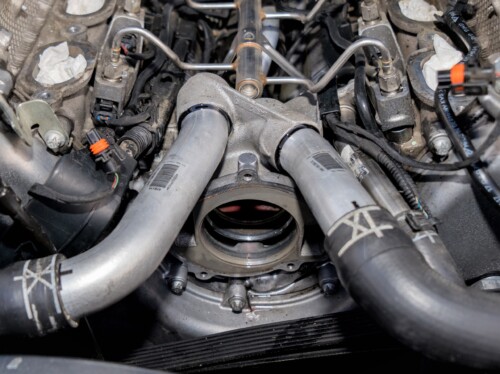 Failure of the water pump and thermostat assembly are common on the Panamera engine. Check the history to see if the work has been completed before. Both the water pump and thermostat were updated with the revised versions being more durable than the original. If this work has not been completed before, expect to have to replace the water pump and thermostat sooner rather than later.
The work is not difficult and can be completed without too much complication. Failure of either the water pump or thermostat can cause catastrophic overheating, so it’s important to know when this work was done or if it needs to be completed soon. A thorough PPI should examine these areas for coolant leaks which is a sign of upcoming problems. However, the thermostat can fail by becoming stuck open or closed with no leaks visible. Checking the engine warm up cycle and testing for coolant flow is the best way to determine thermostat health.
Auxiliary Coolant Pump Failure
 The Panamera is known to have problems with the auxiliary coolant pump and can experience an engine overheating problem at low revs. So, after you’ve enjoyed the test drive and the engine is warm let the car sit and idle for 15 mins before you turn off.
The electric auxiliary coolant pump is designed to assist the main water pump when engine revs are low, such as at idle in traffic. The failure of the pump causes the coolant temp to rise rapidly and set engine overheating faults. The engine may also go into a self protection mode and shutdown completely. Typically this will occur when the car is sitting still for longer periods, such as bad traffic and will not be seen while driving.
Misfires and Rough Running - Ignition Coil Failure
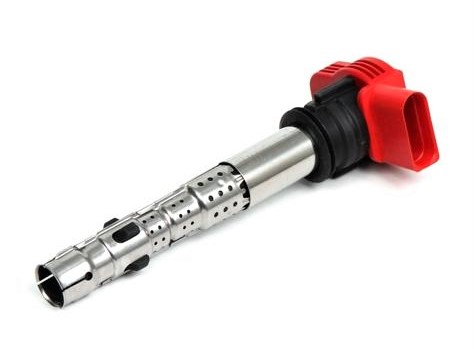 The 971 Panamera engines experienced a number of ongoing issues with ignition coil failure. Check the history on the Panamera you are looking to buy to see if this work has been completed. Most likely it has – not many early 971 Panamera models would have made it this far without replacing the ignition coils.
A failing ignition coil typically stops any spark and sets a misfire code with a completely dead cylinder. This will cause rough running, especially at idle. However, coils can also part fail, where a weak spark causes misfires to occur when the cylinder is loaded under acceleration. Resetting the cylinder and clearing the CEL fault will cause the engine to run well at idle but set the fault again when driven more aggressively. Pushing the engine a little on a test drive is a good thing to do to check the health of the ignition coils.
Engine Oil Leaks
 Oil leaks from any engine are commonplace. On the Panamera, the most common leaks occur in the valve covers, and camshaft adjuster seals of the V8, the rear main seal in the V6, and turbo oil supply lines. A thorough PPI should identify any oil leaks and what work is necessary to resolve the leaking oil. You should note where the oil is leaking from and also where it is going. On an old Panamera you might tolerate the odd drop of oil on the floor, however, if the oil is leaking on to the exhaust or the engine wiring harness, then potential catastrophe awaits in the form of a fire with the exhaust or major engine electrical problems in the case of the wiring harness.
Turbo Engine Oil Leaks
The Panamera models with turbo engines are subject to oil leaks from the oil supply lines to the turbos. This leak is messy and dangerous as the turbos are extremely hot and likely to burn the oil or cause a fire. The oil leaks in the turbo supply lines is very expensive and complex – less so in the V6 model. In addition, low oil supply to the turbos causes them to wear quickly. The recommended work calls for replacing the oil supply lines and rebuilding the turbos if damage has occurred.
High Pressure Fuel Pump Failure
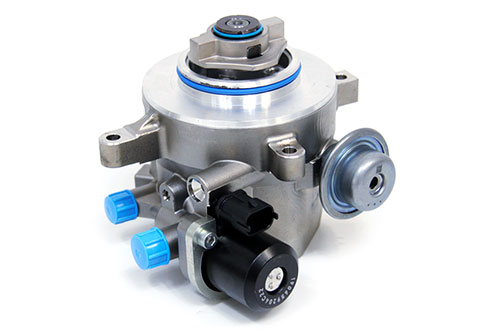 The Panamera 971 engines feature a high-pressure fuel pump driven from a camshaft. The high-pressure fuel pump is subject to failure and typically, it initially sets a check engine light and faults associated with the fuel rail pressure.
Typical symptoms of a failing high pressure fuel pump include:
- Delayed start of the engine or long crank time
- Hesitation or sputtering in acceleration
- Lack of power
- Higher engine temperatures
- Engine stalling and being difficult to restart
Misdiagnosed High Pressure Fuel Pump
Lack of fuel in the engine fuel rail sets faults for low fuel pressure. The obvious candidate is the high pressure fuel pump, however, the high pressure fuel pump cannot do its job if no fuel is being delivered to it. The low pressure fuel pump in the tank can also fail and cause misleading symptoms and misdiagnosis of the high pressure pump. Low pressure fuel pumps in the Panamera have been updated a number of times and will commonly fail.
Starter Motor Failure
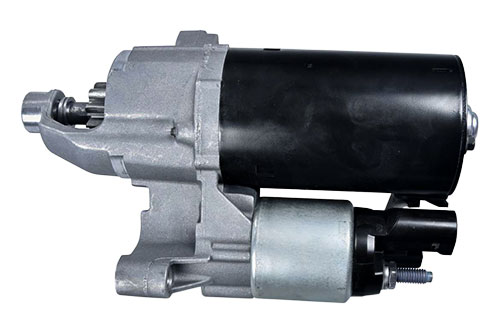 The 971 Panamera features the start/stop system for fuel saving. If you are driving in stop and go traffic this can contribute to better fuel economy. It can also be rather annoying and many people turn it off! When shopping for a pre-owned Panamera, try to establish where the Panamera has been driven during it’s life. If you suspect more city driving, then there is a good chance for more use of the start/stop feature and a significant increase in the wear on the starter motor. That might mean having to replace it sooner rather than later and can be an expensive job.
Hybrid System Problems
Main Battery Degradation and Failure
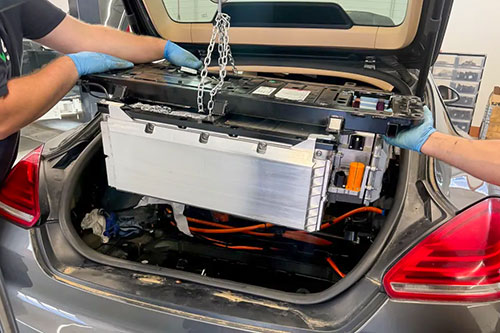 The Panamera Hybrid models will experience significant battery degradation, with electric-only ranges dropping from the expected 18–20 miles to as low as 6–7 miles over time.
The hybrid battery has an extended warranty that for the early 971 is about to expire. Eventually, you will have to replace the battery on the hybrid system and the costs are high. In many cases, the cost for replacing the main battery and associated components will be north of $12K. How much gas did you save buying a hybrid? At $3 a gallon, you’ll need to avoided buying 4000 gallons of gas to break even on the hybrid battery cost! Good luck.
Buying a used hybrid version puts you at serious risk for this large expense. Checking the health and history of maintenance on the hybrid system is critical when buying a used hybrid Panamera.
Water Ingress Leading to Battery Corrosion
Part of the annual maintenance schedule for the Porsche Panamera is the clearing of roof water drains. However, this has been overlooked and not carried out in many circumstances. The resultant damage from blocked roof drains can be extensive and a class action law suit was filed against Porsche. More details below.
Water ingress, particularly through blocked roof drains into the trunk area of the Panamera can lead to the hybrid battery being submerged in water and seriously damaged.
Charging System Failures
Issues with the charging system, including faulty connectors and wiring, have been reported. These problems can prevent the vehicle from charging properly, leading to reduced electric-only driving range and potential hybrid system malfunctions.
Power Electronics Unit (PEU) Failures
The PEU, which manages the interaction between the internal combustion engine and the electric motor on the Panamera Hybrid models, is a common failure point. Replacement of this unit is complex, expensive, and requires proper re-coding, calibration, and initialization using the PIWIS diagnostic tool.
Battery Management System (BMS) Errors
The BMS manages the state of charge and health of the battery. Errors can be reported when the system detects discrepancies in voltage between battery cells. Often times this is erroneous but does impact hybrid performance. Repairs are complex and expensive.
971 Panamera Transmission and AWD – Concerns and Reliability
Panamera Transmission Concerns
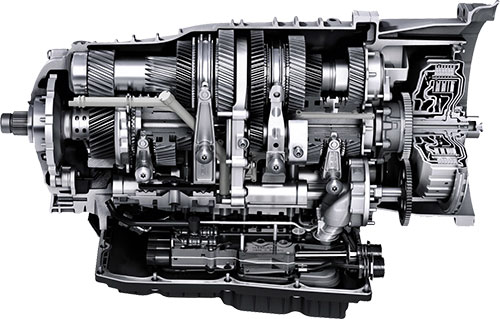 The Panamera 971 uses the Porsche PDK 8 speed transmission which is extremely reliable and more robust than the version in the coupe models. However, several common issues have arisen with the PDK over time, and many have led to expensive repairs being deemed necessary.
PDK Maintenance is Critical
The Porsche factory recommendations for maintenance of the PDK transmission have also evolved over time, with maintenance now being performed more frequently than originally recommended at the introduction of the transmission. We recommend you speed up the maintenance on your Panamera PDK transmission.
The major problems with the PDK relate to a lack of timely maintenance, the unwillingness of Porsche to allow the dealership channel to take the PDK apart, and a lack of available parts! That tends to force replacement of the transmission – $20K+ and the subsequent complaints. The good news is the Porsche PDK transmission is fully repairable for a fraction of the cost of replacement.
Check the maintenance history thoroughly for the transmission in the Panamera you plan to buy. Many models on the used market have never had a transmission service and are prime candidates for PDK problems.
See PDK known problems and expert PDK Repairs.
Transfer Case or All Wheel Drive Controller
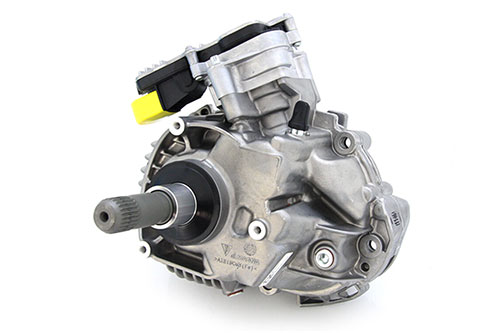 The Porsche transfer case or all-wheel-drive controller is the core mechanical unit within the all wheel drive system that makes the Panamera all wheel drive models capable of intelligently distributing power to all four wheels based on driving conditions.
The transfer case is a gearbox-like housing bolted to the back of the main transmission:
- Uses a multiplate clutch pack and electronic control to vary the torque split between the front and rear axles.
- Managed by Porsche Traction Management (PTM).
- Constantly adjusts power flow to axle based on wheel slip, throttle position, steering angle, and stability control inputs.
Failure of the transfer case has become a common issue on all wheel drive Porsche models. Porsche extended the warranty on the transfer case for the Panamera and revised the technology. However, the transfer case remains a potential weak point and an expensive repair. Recommended maintenance for the transfer case has been increased as a result of common failures. Porsche now recommends the transfer case fluid is exchanged more frequently than the original lifetime recommendation!
Transfer Case History on Used Panamera 4
Replacing the transfer case or all-wheel-drive controller on the Panamera is a $5K job, so understanding the repair history on the transfer case of the used Panamera you plan to buy is important. Use the vin number with a Porsche dealer to check the warranty on the transfer case in the car first. Check the history for transfer case or all wheel drive controller maintenance. If the Panamera you plan to buy has no history of work or replacement, you should budget to complete this work at some point in the future. See Panamera common problems for symptoms associated with the transfer case problems.
Electronics, HVAC, Infotainment, Water Leaks
Porsche Communication Management (PCM)
 The 971 Panamera models were shipped with PCM 4.0 and the facelift 971.2 was upgraded to the PCM 6.0 version. Various software updates to stabilize the system, improve functionality and connectivity have been released. Check the software revision level on the PCM in the Panamera you plan to buy – update to the latest software if possible.
The PCM in the 971 Panamera features a 12.3-inch full-HD touchscreen in the center console with the following functions:
Navigation:
- Real-time 3D navigation with satellite overlay (depending on market).
- Online traffic data, Google Earth overlay (subscription-based).
- Porsche Connect services for live updates.
Media & Connectivity:
- AM/FM, HD Radio, SiriusXM.
- Bluetooth audio streaming.
- USB & AUX inputs.
- Apple CarPlay (standard after 2017; Android Auto only added with PCM 6.0 in 2021).
- Optional Burmester® 3D High-End Surround Sound or Bose® systems.
Vehicle Functions:
- Access to drive mode settings – Normal, Sport, Sport Plus, Individual.
- Maintenance information.
- Climate control adjustments.
- Suspension, chassis, and exhaust controls.
- Hybrid energy flow and charge status.
Voice Control:
- Natural speech recognition.
- Triggered with “Hey Porsche” (PCM 6.0+). Earlier PCM 4.0 required button press.
Digital Services (via Porsche Connect):
- Remote access via smartphone app.
- Car finder, lock/unlock, and pre-conditioning for hybrid.
- Over-the-air map updates.
HVAC Functionality
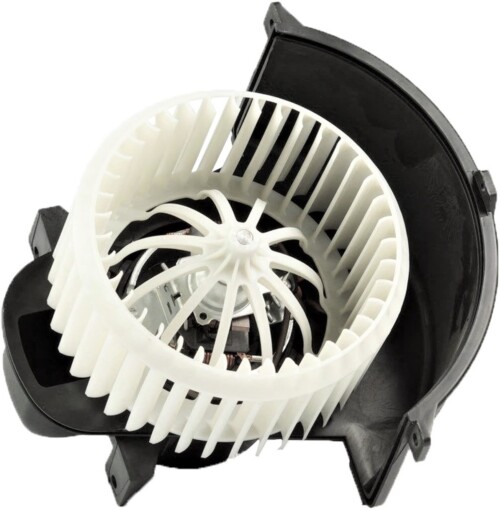 HVAC functionality is often overlooked by buyers and sometimes at a PPI too. The Panamera has known issues with the blower motor and blower motor resistor that governs the fan speed. Test the HVAC thoroughly for all fan speeds and the correct redirection of air flow through the cabin outlets. Make sure you have cold air with AC and warm air with heating control.
Replacing the blower motor and resistor are fairly straightforward and common. Replacing the motors that control the flow of air through the airbox to the cabin outlets (feet, face, screen) is an expensive proposition. Removal of the dash may be necessary and that’s not a job most people would ever wish to undertake!
Water Leaks - Blocked Roof Drains and Electrical System Damage
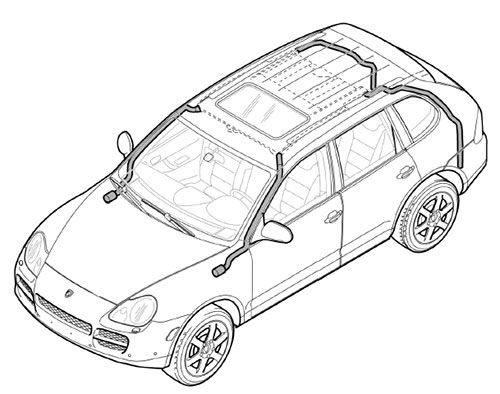 Part of the annual maintenance schedule for the Porsche Panamera is the clearing of roof water drains. However, this has been overlooked and not carried out in many circumstances. The resultant damage from blocked roof drains can be extensive and a class action law suit was filed against Porsche.
Porsche Sunroof Drains
The Panamera has 4 drains that take water away from the roof and send it through a tube to an exit point low on the bodywork. These drains can become blocked with debris from leaves, dust and general road dirt. They can also fail or split. Once the drain is blocked, water backs up in the pipe until the pipe gives way or it finds another way out. Unfortunately, the exit point for the water typically seems to be close to sensitive electronic equipment. Water ingress usually results in unusual electrical behavior and is often difficult to pinpoint.
Finding Water Leaks in Your Panamera
For the Panamera you plan to buy, check thoroughly for signs of water in the trunk or inside the passenger cabin by the front windshield – blocked or failed roof drains are normally the root cause. The water can very quickly enter the wiring harness, electrical connectors, and control modules near the leak. The replacement of control modules is expensive and often requires additional security programming. Water entering the trunk can also damage the trunk mechanism, exterior lighting, and the trunk interior. Check the history on the Panamera and see if control modules have been replaced in these areas.
At a PPI ask that the roof drains are thoroughly inspected and declared free to drain. If they are not clear and you purchase the car, clear the drains as quickly as possible afterwards.
Expensive Battery Health
Your PPI should include feedback on the health of the battery. Most batteries have a useable life of approximately 5 years. After that, battery performance starts to decline and the battery will eventually fail. Check the age of the battery and the CCA output. See our article on battery health.
The Porsche Panamera 971 battery is located in the trunk, beneath the floor cover and its worth paying extra on a PPI to understand the type of battery installed and it’s health before making you purchase.
Check What Type of Battery is Installed
Typically you would expect to find an AGM (Absorbent Glass Mat) battery in most 971s because of high electrical demand. However, commonly overlooked is that some higher trims or facelift models included a lightweight lithium-ion battery option. The cost to replace the lithium-ion battery is usually above $2K and can come as a shock to many unaware owners.
Panamera 971 Braking System Check Points
Checking for Brake Wear
The brakes on the Panamera are generally excellent with the S, GTS, and Turbo model featuring larger brakes with drilled rotors. Brake pad material does degrade over time – check on low mileage examples to see when the last brake service was performed. The brake fluid history should show a change every few years regardless of mileage. Also, measure the amount of brake pad material remaining – you want more than 3mm. At the 3mm mark the brake pad wear sensor will trigger the replace brake pads message. This should be reported back with your PPI.
A complete brake service with pads, rotors and sensors can be quite expensive. So, if you’re buying from a used car vendor, look for new pads on old rotors. Both the pads and rotors should always be changed at the same time.
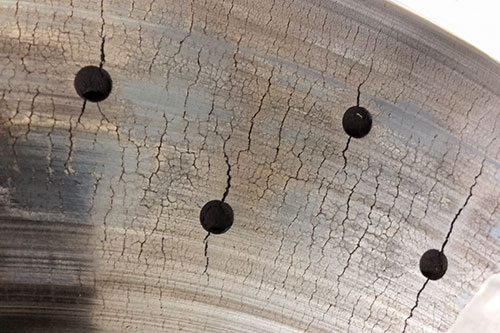 Checking Drilled Rotors For Cracks
Many Panamera models have drilled brake rotors. Look carefully to see how clear the drill holes are and make sure there are no cracks between the drill holes. Cracks between the drill holes can lead to a much bigger crack developing and rotor failure very quickly under heavy braking. A failed brake rotor when you are trying to stop quickly is an unpleasant experience in a large heavy sedan!
PSCB Option – White Calipers
Later Panamera models can have the Porsche Surface Coated Brakes (PSCB) fitted. These are usually characterized by white brake calipers and mirror like brake rotors. These brakes will last longer and produce lest dust, however, they are more expensive to replace than the standard rotor option – less than the PCCB yellow caliper option – see below.
Brake Fluid Condition
Brake fluid has a limited lifetime. Older cars have often skipped the brake fluid service, so it’s important to determine the health of the brake fluid on the Panamera you plan to buy. Check the history for the last brake fluid flush in the service records. If the last brake fluid service was more than 2 years ago, we recommend you complete a brake fluid service sooner rather than later.
The brake fluid you see in the reservoir maybe be clean and look healthy. This is not a good test. What you can’t see is what matters – the fluid in the caliper at the end of the line the reservoir connects too. Despite the fluid in the reservoir being clean, the fluid in the caliper could easily be burnt and degraded.
PCCB Brake Option
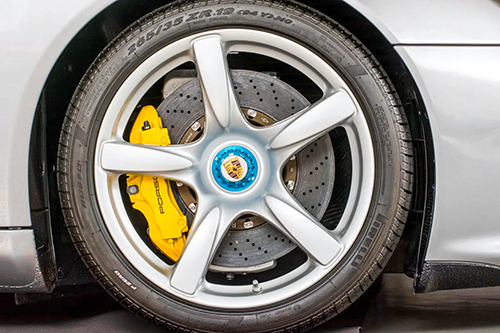 Some Panamera models were fitted with the optional Ceramic Composite Brakes – the Turbo S model as standard. This option is typically associated with yellow brake calipers. During the PPI it’s important to be sure of the type of brakes fitted to the Panamera you want to buy. If the car is fitted with the PCCB option and the brakes need to be replaced the cost will be between $10K and $20K.
Upside of having PCCB brakes:
- Massive weight savings
- Reduces rotational mass for better handling and ride
- Superior heat resistance
- Significantly longer lifespan – 100K miles possible
- Virtually no brake dust
The downsides of PCCB brakes:
- Very expensive replacement cost
- Slightly less initial bite when cold – not dangerous, just noticeable
- Susceptibility to chipping or damage if not handled correctly
Panamera 971 Bodywork, Suspension, and Tires
Liftgate Issues
The Panamera 971 series can have liftgate issues that include failure to open or close, improper closing, and problems with the automatic power function. These issues can often be attributed to faulty electronics, mechanical wear and tear, or blocked drainage channels causing control module failure. Common failures include:
Lock actuator failure – The electric lock actuator can fail due to a broken internal motor and prevents the tailgate from locking or unlocking. A clicking noise when trying to open the hatch may indicate a failing actuator.
Rear module failure – The rear electronics module controls the tailgate functionality and commonly fails due to water intrusion – see roof drain clearing. When water soaks the module, the tailgate will stop working, the alarm is often triggered, and the module is unreachable through the PIWIS.
Wiring harness damage – The wires for the liftgate run through the hinges and through constant movement during the opening and closing of the liftgate become brittle and break. This can cause intermittent or complete failure of the liftgate systems and other electrical components in the hatch such as lighting.
Check the operation of the liftgate thoroughly before making your purchase and check the repair history for work completed on the rear liftgate.
Spoiler Problems
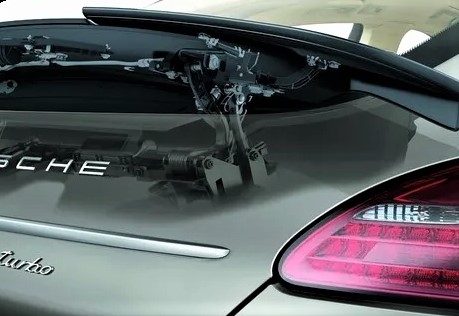 The Panamera has a rear spoiler that raises and lowers based on vehicle speed. Failure of this system can be frustrating and expensive. Commonly, the actuators for the rear spoiler will fail causing the lopsided or failure to raise faults. There are a number of possible causes for this issue, but the most common is a failure of the rams that raise and lower the spoiler mechanism.
Panamera Suspension Check Points
The Panamera suspension is extremely durable and should not have any issues given the age of the vehicle. However, rubber bushings and struts can be worn with age or spirited driving. Listen for clunks or squeaks and check for fluid leaks from suspension struts. The most common issues are as follows:
Worn Control Arm Bushings
- Symptoms: Clunking noise over bumps, uneven tire wear, loose steering feel.
- Cause: Original rubber bushings degrade over time.
- Fix: Replace control arms or bushings.
Failed Lower Control Arms
- Symptoms: Clunking, instability under braking, poor alignment retention.
- Fix: Replace with OEM or upgraded units
Top Mounts / Strut Mounts
- Symptoms: Squeaking, clunking over bumps, poor ride quality.
- Fix: Replace top mounts.
Worn or Leaking Shocks or Struts
- Symptoms: Bouncy ride, nose dive when braking, poor cornering stability.
- Fix: Replace shocks or struts
Sway Bar End Links & Bushings
- Symptoms: Clunks or rattles during cornering.
- Fix: Replace worn end links or sway bar bushings.
Alignment & Ride Height Issues
- Symptoms: Pulling to one side, excessive inner tire wear.
Air Ride Suspension and PASM Issues
Many 971 Panamera models are fitted with air ride suspension. The ride quality and performance is enhanced, however, the air ride suspension is less reliable than the standard suspension setup. Check thoroughly to understand what type of suspension is included on the model of Panamera you intend to buy. Air ride suspension repairs can be expensive and the skills needed to correctly diagnose issues are not commonplace. More detail on the air ride suspension issues in our Panamera common problems section and see our recommended Porsche repair shop list for more help.
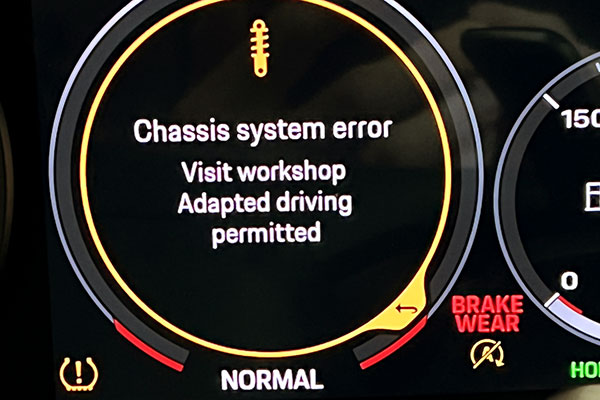 PASM Option with Air Ride Suspension
PASM is a suspension option that constantly makes adjustments to the shock absorbers while your drive. PASM dynamically controls the damping force based on the feedback from road conditions or driving mode you choose. This enables the suspension to be controlled based on performance – comfort for longer drives, versus tight, firm suspension for more aggressive driving. PASM faults can be complex to diagnose and potentially expensive – especially with the wrong diagnosis!
Thoroughly check the suspension repair history of the Panamera you plan to buy if it includes the PASM suspension option.
Tire Wear and Age
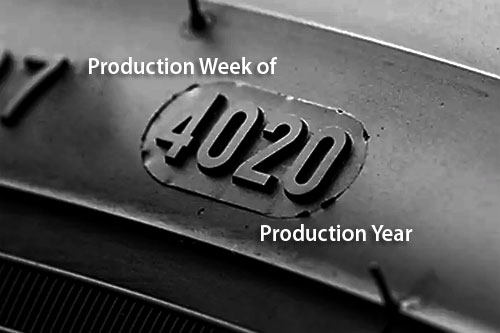 Uneven tire wear, especially on the inner rear shoulders, often points to worn rear control arms, poor toe setting, aggressive camber settings, and general poor alignment. Rear tires are expensive and an alignment issue will quickly degrade the tire. This should be revealed in the PPI.
Check tire DOT dates — anything over 5 years old should be replaced, even if tread looks good. Low-mileage cars often have old, degraded tires that can fail despite the minimal wear level. With a used Panamera and low mileage, you will likely need new tires because of their age rather than because they are worn. Knowing the DOT date allows you to plan for when the tires will need to be replaced.
Headlights
 The Panamera 971 is fitted with a variety of newer style headlights depending on the individual ADAS options and model. The option packages included daylight running lights, dynamic cornering function, and PDLS plus on late models. Some models featured black tinting inside the headlight.
It’s important to understand which option is included with the Panamera you are interested to buy. The difference between simple bulb replacement and headlight unit replacement is substantial. Check the headlight functionality and the condition of the lenses thoroughly. Check for condensation or cracks that could lead to condensation. Replacement of the headlight unit is expensive, with the enhanced lighting package option typically more than $2.5K per light unit. Control modules for the headlights may also require additional coding if replaced.
If you don’t know what to expect when a headlight goes out on your used Panamera, you might be in for a nasty expensive shock.
971 Panamera Maintenance, Running Costs, Spare Parts, Repairs
Panamera 970 Maintenance Service Schedule
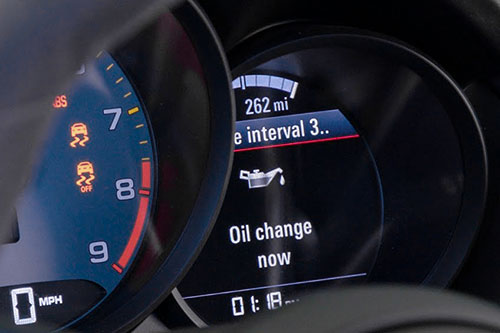 Maintenance Service Dash Messages
The Porsche Panamera will display a variety of maintenance-related messages on the dash to remind you of service intervals. These appear in the central multifunction display and can vary depending on model year and the PCM (Porsche Communication Management). Check the PCM in the car you want to buy and scroll through the remaining time and mileage in the maintenance area. The guide should indicate the time to the next service and what type of service is due. There is a significant difference between the cost of an annual service and a major service interval every four years. Understanding what service is due next, what’s included in that service, and the cost of the maintenance interval, can help you plan for your ongoing ownership cost.
Save 20% on Maintenance at a Porsche Repair Shop
Many dealerships are limiting service to newer vehicles, often turning away Porsche models over 10 years old due to a lack of technicians trained in older cars and an increasing focus on EV cars. The original 971 Panamera models are not in that window yet but will be soon.
Panamera 971 Running Costs
The first thing you have to do with almost any 971 Panamera on the used car market today, is to be sure the maintenance is up to date. Often that’s not simple, so completing a full inspection and putting the Panamera you buy into the best starting position with all maintenance freshly completed is the way to go.
Additional costs include repairs, insurance, and taxes. Repair costs can vary dramatically depending upon the issue that needs to be resolved, and typically work on the Panamera is difficult and attracts more labor time with expensive parts. We suggest budgeting a further $80 per month to cover likely repairs over a four year period.
PDK Transmission Maintenance
PDK Maintenance is Critical
The Porsche factory recommendations for maintenance of the PDK transmission have evolved over time, with maintenance now being performed more frequently than originally recommended at the introduction of the transmission. We recommend you speed up the maintenance on your Panamera PDK transmission.
Most of the major problems with the PDK relate to a lack of timely maintenance, the unwillingness of Porsche to allow the dealership channel to take the PDK apart, and a lack of available parts! That tends to force replacement of the transmission – $20K+ and the subsequent complaints. The good news is the Porsche PDK transmission is fully repairable for a fraction of the cost of replacement and timely maintenance improves the PDK reliability.
See PDK known problems and expert PDK Repairs.
Transfer Case or All Wheel Drive Controller Maintenance
On all wheel drive Panamera models frequency of recommended maintenance for the transfer case or all-wheel-drive controller has been increased as a result of common failures. Porsche now recommends the transfer case fluid is exchanged more frequently than the original lifetime recommendation! There’s a good chance this hasn’t been done on the used Panamera 971 you plan to buy – check the maintenance schedule and perform this work if you have doubts about the history.

The Buying Process
What to Look for When Buying a 971 Panamera
Pre-Purchase Inspection (PPI)
Once you’ve found a potential Panamera, your first step should be a thorough inspection by a Porsche specialist. If the car is a CPO car, the dealership has already completed the inspection for Porsche – it is extremely detailed and has strict criteria. A pre-purchase inspection (PPI) can uncover hidden mechanical issues that aren’t obvious at a glance. It’s important to use a competent and experienced shop to perform the PPI. Providing the shop with any known repair or maintenance history on the car will help them with a detailed assessment. Even if the Panamera is cheap, it’s still worth spending a few hundred dollars to get a thorough PPI.
Feedback From a Pre-Purchase Inspection
The inspection should uncover the details of the mechanical wear on the Panamera and the general condition. What you also want to know from the report is what’s next. Before making the purchase, you want to know the extent of maintenance work needed on the car in the next few years even if the car is CPO. Use our maintenance guide for the Panamera to map the history to your next maintenance steps. You also want to know the age and health of the battery and the DOT on the tires.
Fault Codes and Over-Revs
The PPI Should Check Fault Codes and Emissions Readiness
Before buying any car, it’s crucial to check when the OBD fault codes were last cleared and to verify the emissions monitor status. A seller can easily clear codes just before your test drive, which also resets the emissions monitors to “not ready.”
Since emissions tests require multiple drive cycles, hidden issues may not reappear for many miles. During a PPI the shop should confirm that the emissions system shows “ready” – this indicates the car has been driven enough since the last reset and isn’t hiding recent faults.
How Hard Has the Car Been Driven – Over-Revs
Revving an engine to the red line is safe and even healthy for Porsche engines when done correctly. A proper gear change at redline may briefly raise RPM slightly—this is normal and harmless. With the Panamera PDK transmission the potential for over-revving the engine through a manual transmission gear miss-shift has been eliminated. High range over-revs are therefore extremely rare.
Recorded Events
Fortunately, Porsche’s engine management system logs key data, including engine over-rev events. The ECU permanently records engine hours and when these events occurred.
There are six over-rev levels, from minor redline hits to extreme, potentially engine-damaging RPM spikes. Lower-level events often just show spirited driving, but higher-level over-revs may indicate serious stress and events that could shorten the engine life. During a PPI you want to know what over-rev details are recorded in the ECU – the Panamera should never have events above level 2 recorded. This detail is included with CPO cars.
Check for Completed Recalls
Specific models and production ranges of those models can require repairs under manufacturer recalls. It’s worth checking to make sure that the pre-owned Porsche you plan to buy is up to date with the recalls required on the specific model. You can do this most effectively with:
National Highway Traffic Safety Administration
or directly with Porsche:
971 Panamera Recalls
The Panamera 971 has been the subject of a number of recalls and maintenance campaigns. The recalls include issues with the electronic power steering, rear anti roll bar links, brake pad wear indicator faults, external coolant pump faults, and seat belt anchor bolts.
Build Sheet, Window Stickers, Options
The original build sheet for the Panamera you are interested to buy will tell you what was included during production. Understanding the actual build and options included with the Panamera can give you an accurate picture of the relevant value to other cars for sale. Many options included with the car are not easy to determine visually without the help of the original build sheet. Most of the options on the car will be described using acronyms or abbreviations. The better informed you are and better understanding of exactly how the car was built, gives you the very best information you need to plan for maintenance and repairs in the future.
For example – it comes with pretty yellow calipers. Typically that means PCCB and a very expensive brake job in the future! Look for highly desirable options that maintain value such as PASM, Sport Chrono, PSE, etc.
If you find a helpful and willing person at a Porsche dealer, using some charm you may be able to persuade them to provide you with a copy of the build sheet and window sticker for the car you plan to buy. The seller should provide this information to backup their claims of the vehicle for sale. If all else fails, try an online resource such as Vin Analytics
Why Is the Car for Sale?
There are often very genuine reasons why a car is for sale. We all move on, however, older cars are often put up for sale when mechanical issues are deemed too expensive. Dig deep and if possible, understand why the car is for sale.
Who Is Selling the Car?
If you’re buying from a used car dealer, find out where they sourced the Panamera. A Porsche-focused dealer is a good sign. But if the dealer typically sells budget minivans, proceed with caution. Who trades in a Porsche at a used car lot that doesn’t specialize in them? Often, it’s someone offloading a car with hidden issues, betting the dealer won’t notice. Do your homework. Older Panamera models are likely to appear at general used car dealers. Typically, they wont really understand what they have in their possession – your job is to find out if they have a great car for sale or if the Panamera is one they are just blissfully unaware of potential issues. After reading this guide, you’ll often know way more than the seller – that’s a good thing!
Actual Production Date – Sticker On Driver’s Door
Most cars are advertised using the model year or registration year. This can be misleading. The production year runs August through July. That means cars produced in August through December are described as the following year’s production e.g. September 2001 production is often called a 2002 model year car.
Why Does This Matter?
The answer is parts, recalls, updates, and real value. The actual production date is critical to understand the likely components fitted on the car. In the Panamera case, the recalls and campaigns happened in a specific production window. Knowing the actual production date for the Panamera you plan to buy can help you determine the real value of the car and the potential for issues.
Mileage Covered
10K miles per year is considered good condition for most cars. The Panamera is an everyday use sedan, so higher mileage is to be expected. What’s important to discover is how the maintenance for the Panamera changed over the mileage covered and its frequency – that will likely tell you more about the health of the car versus the total mileage covered. Pay particular attention to the maintenance history on the PDK transmission and all wheel drive transfer case.
What Type of Mileage
High speed freeway driving versus around town local driving can have a serious influence on the overall engine and transmission condition. Long drives at higher speeds tend to produce less wear as opposed to lots of cold starts and short journeys. Look at the location of the owners and make a judgement based on the mileage recorded over the time the owner used the car. Higher mileage recorded over a shorter time is not necessarily a bad sign – this suggests less start/stop short journeys and longer individual trips – potentially healthier than low mileage.
Low Mileage Garage Queen – Not So Fast!
While low mileage on a Panamera is very appealing, it can come with its own set of issues. Infrequent use often means missed service intervals, leading to age-related wear in fluids, seals, tires, and brakes. Lack of maintenance based on time is risky. For example, spark plugs should be replaced every 10 years, regardless of mileage, and brake fluid flushed every 2–3 years. Tires too may have good remaining tread but can still be unsafe if over 5 years old.
Low-mileage cars often demand a premium, but be sure to budget for catch-up maintenance after your purchase. Pay particular attention to the PDK transmission maintenance performed and all wheel drive transfer case maintenance.
Number of Owners
For most Porsche cars, the number of previous owners matters less than the car’s maintenance history and overall condition. What really matters is how long each owner had the car and how well they took care of it. If you see an increasing number of owners over a decreasing amount of time, that may well be a sign of neglect. You are likely to see a good maintenance history during the initial ownership period, followed by an increase in the number of owners and a decrease in the amount of maintenance performed.
Title Status, Accident History
There are several good ways to check the title status on a vehicle available. All you need is the vin number.
- National Motor Vehicle Title Information System (NMVTIS) – Government-backed, very reliable
- Carfax – Detailed history reports
- AutoCheck – Similar to Carfax
- VINCheck (NICB) – Free check for theft/salvage
Geographic Ownership History
Understanding where the car has been in the country can give you some clues as to its history of use. Cars in the south are likely to have been driven regularly as the weather does not preclude the enjoyment of the Panamera. However, cars in northern states are often subjected to more road chemicals and more harsh conditions. Climate too can be a factor. Hot and dry versus high humidity has different effects on the health of rubber components, fluids, and interior trim for example.
Porsche Panamera Years to Avoid
This is a common question and not one that is easily answered. All Panamera model year production has some potential for issues that you should pay close attention to. The earlier production 971 Panamera has definitely experienced more problems, but most were fixed under warranty, recalls, or revised parts. There really isn’t a production year to avoid at all – more important is understanding the maintenance and repair history of the Panamera in question. For sure, the Panamera improved with age, so later models are significantly more desirable but do depreciate in value more quickly.
Buying Out of State or From Distance
As luck would have it, the Porsche you really want is on the other side of the country! This used to be an issue, but these days buying cars out of state is commonplace. There are technology based tools to enable a smooth transaction and help minimize the risks, and excellent ways to transport you car home.
Tips for Buying a Porsche Out of State
- Start with a thorough online evaluation
- Get detailed photos: exterior, interior, engine bay, undercarriage, and tires.
- Request a walkaround or live video call (FaceTime or Zoom) to confirm condition.
- Run a VIN check
- Use Carfax, AutoCheck, or VinAudit to check for accidents, title issues, maintenance history etc.
- Get an option list or build sheet using a vin decoder
- Use an escrow service for the transaction
- Insure the car before transport to you
Transporting the Car – Recommended Car Carriers
Some buyers like to fly in, put their hands on the car, complete the transaction and drive home. In many cases this is not practical, and so buyers turn to shipping companies to transport their new purchase directly to their home. If you’re buying from a Porsche sales specialist, they will likely have an option and can recommend a car shipping company they typically work with. Here are some shipping companies that we have worked with that offer excellent service:
Find a Local Porsche Repair Shop For Support
Recommended Porsche Repair Shops You Can Trust

Ownership and Driving Experience
What to Expect and How to Care For Your Panamera 971
What it's Like to Live With a Panamera 971
 All versions of the Panamera are easy to drive, park, and have fun in everyday. Owning a Panamera feels less like having a family sedan and more like owning a cross between a Porsche sportscar and a small German tank. The Panamera combines good build quality with a comfortable ride, while feeling remarkably substantial and secure even at high speeds. You’ll find it easy to drive on the morning commute and with an all wheel drive model, reassuring when the rain or snow hits on your journey home.
Porsche is a luxury brand, so while you have the brand experience, don’t be surprised when maintenance and repair costs reflect the same level of luxury. The Panamera requires more expensive maintenance than many of it’s competitors and the more timely the maintenance, the better the Panamera performs in the long run.
Panamera Everyday Experience
- Comfort – The Panamera is comfortable and practical for daily use. With PASM (standard on some models), it rides well even over broken pavement and is quite forgiving. Optional air-ride suspension makes the ride even smoother for long journeys, and changing to a sport mode provides the tight sportscar feel you’d want from a Porsche.
- Interior – Driver focused, well laid out, cool technology, and high-quality cockpit style feel. Good solid upscale materials that last well and feel good. The sloping center console running into the dash, is lined with touch sensitive buttons for climate, suspension, off-road settings, and seat functions etc. lots of buttons to learn!
- Seats – 8-way or 14-way power adjustable with firm German sport-oriented bolstering. Optional 18-way Adaptive Sport Seats with adjustable bolsters, ventilation, and memory are included with some models.
- Space – The Panamera has enough room to fulfill the family sedan requirement. However, the rear seats are little tight on leg room for long journeys unless you opt for the stretched Executive version. The cargo area is practical for most things, but the sloped hatch limits tall items. Two sets of golf clubs can be done at a pinch. The Turismo version solves this problem.
- Infotainment – The PCM is hi-tech and has lots of menus and options – some are less intuitive than you would imagine. Connectivity is easy and usually works well with the latest devices.
Performance & Driving Feel
- Driver Interaction – The Panamera talks to you and feels good on the road. The steering is tight and well-weighted and the overall feel is stable, planted, and sharp to respond to input. Cornering feels balanced and you can be confident of keeping your foot in through twisty turns.
- Performance – The base 2.9L V6 is OK around town, however, for real power the Turbo V8 model performs at very track competitive levels. The GTS V8 turbo models have good throttle response and are more than fast enough for the practicality of getting home quick after a weekend away. The later 971.2 V6 twin turbo models have good power and better efficiency than the earlier 3.0L version.
- Interior Noise – Porsche added extra sound deadening to the Panamera on the later models. The difference is negligible. The cabin was already quiet enough to still enable an awkward silence if you’d like one, or pretend your in the office while on the phone and heading for the golf course.
- Exhaust and Engine Tone – The engine and exhaust tones from the Panamera are a quiet balance between sports car and family sedan. The V6 always sounds a little louder while you push it, but the V8 models have an excellent deep powerful sound. The exhaust is refined and just enough to be recognizable as a performance car. The 971 versions are quieter and engine tones less noticeable than previous versions. Sport exhaust option can make a serious difference to exhaust tone enjoyment.
- Fuel Consumption – It’s an ICE Porsche – do you care? Well, if you do, the 971 is better than the previous models. The V6 will average mid 20 miles per gallon and the V8 models typically land in the low 20’s, although getting the V8 turbo in the teens for fuel average fuel consumption is easy and fun! That’s representative of a sporty family sedan that is designed to be driven and enjoyed. The hybrid models can be great around town using the electric mode with averages in the 35+ range. However, dragging all that battery and hybrid weight around can cause the average mpg to plummet below 20 mpg in depleted battery circumstances.
Efficient Maintenance Service
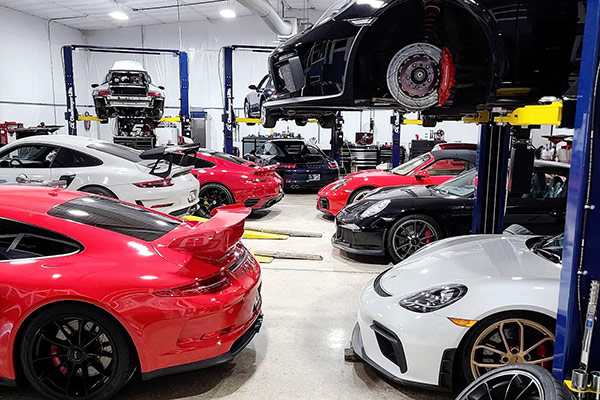 Panamera Recommended Maintenance Intervals
Maintenance on the Panamera is due annually, with an intermediate service at 2 years or 20K miles, and a major service at 4 years or 40K miles. The annual inspection on the older Panamera is critical to help determine the ongoing health of the car and help you plan for repairs.
Recommended Porsche Repair Shops
Save 20% on Maintenance Service and Repairs
Interior Expectations and Infotainment
 971 Panamera Interior
The Panamera 971 interior is beautiful, luxurious, and high-tech. It blends luxurious refinement with a sporting feel in some models and a cockpit style relaxing luxury in others. It feels very upscale, tailored, and well designed for luxury, performance, and the practicality of every day driving. The interior colors and materials can be configured individually for each car, so it’s unlikely to find two matching interiors.
- Cockpit style feel with high center console.
- Solid build quality with heavy doors and quality feel.
- Driver-focused layout with clear gauges and large displays.
- Firm and supportive seats that hold up well on long drives.
- Commanding feel behind the wheel.
- High-end leather, wood trim, quality materials, and optional colors.
- Multi-function steering wheel.
- Quiet cabin and low road noise.
- Good size cargo area with folding rear seats.
- Good Infotainment system and connectivity.
- Multi-color ambient lighting on some models
Changes to the Interior for the 971.2 Facelift
- All models have multifunction sport steering wheel with shift paddles.
- Turbo S has GT Sport steering wheel standard.
- GTS model has GT wheel wrapped in “Race-Tex” for more sporty feel.
- Turbo S gets 14-way adjustable comfort front seats as standard.
- GTS has upgraded, adaptive sport seats with 18-way adjustability.
- On Turbo S Bose 14-speaker system with separate subwoofer is standard.
- Across the range, the high-end Burmester 3D sound system with 21 speakers optional.
- Wireless Apple CarPlay added.
- Voice Pilot online voice control enhanced.
- Lane Keep Assist and Traffic Sign Recognition become standard.
Tire Management
The Panamera uses Porsche N rated tires designed toward the performance end of the wear spectrum. If the car you buy has 19 or 20 inch rims, you’ll be looking at more than $1500 for a set of 4 tires. The rear tires will wear slightly more quickly than the fronts on the Panamera due to more drive being sent to the rear wheels. You probably wont get as much mileage from a set as tires as you would imagine. The Panamera is heavy and capable of handling faster turns from a suspension matched to performance rated tires – the net result is typically a faster wear pattern.
It’s also important to stay on top of vehicle alignment – any loss of alignment will eat the inner shoulder of the rear tires or cause unusual wear patterns on the front tires. A thorough PPI should determine the wear pattern on the tires and provide some insight into the current alignment. Depending on the ADAS systems on the model you plan to buy, alignment can be more complex and expensive than normal. ADAS often requires calibration of systems like ACC or Night Vision to be completed. ADAS alignment is not always available at tire stores.
 The Porsche Panamera 971 We Would Buy
The Panamera is a great choice for everyday Porsche motoring when you need something larger than a coupe but less offensive than an SUV. The Panamera is comfortable enough for longer road trips, safe and practical for the commute to the office, and the all wheel drive models are good in rough weather. Four adults works in the Panamera and while cargo space is practical for everyday, it’s limited by the sloping liftgate unless you get the Turismo version.
The most desirable Panamera models are the GTS and Turbo cars. These cars top the HP range of the Panamera models and are sporty, refined, and usually fitted with the best options. Turbo S models are harder to find and command a premium price. The early 971 Panamera has not fully depreciated yet, so be careful to understand what the car will be worth when you are finished with it.
 Panamera GTS Sport Turismo is Our Pick
The early 971 Panamera is a good buy – if you can find a lower mileage early S model with good service history and all maintenance complete. Our pick would be a Panamera GTS Sport Turismo in a strong color with all options fitted – and an aftermarket tune for the turbos. Something about the shape that makes the Turismo is more appealing than the standard fastback.
No matter the model you choose, the Porsche Panamera is still a great family sedan. All models offer a great balance between, performance, everyday usability, exceptional handling, and the chance to flaunt the Porsche badge. All models have good interior quality, and sharper styling than most of the competitors. Careful research and depreciation can get you a great car at a reasonable cost.
