 Solving Winter Storage Problems
Unfortunately, the time arrives when you must put your toys away for winter. As the days shorten, many Porsche owners face the prospect of storing their car and not using it over the winter months. Winter storage raises many questions and there are a variety of ideas as to how to approach it.
Recommendations for Porsche Storage
We work with many professional shops that offer storage and maintain car collections that are stored in pristine condition and ready to be driven at a moments notice. So, we assembled the best advice on how to store your car for the winter.
Location Preparation
Choose a dry, temperature-stable garage environment. The ideal temperature is between 50 and 70-degrees F. With a concrete floor, moisture can rise from the floor into the space, so for extra detail, you can cover the floor with plastic sheeting and reduce the risk of moisture rise.
 Avoiding Unwanted Guests
You’re not alone looking for a comfortable winter home for your Porsche. Our rodent friends are also seeking a warm environment to see out the winter months. Take precautions to prevent rodents from entering the space and wanting to stay. Rodents commonly do extensive damage to stored vehicles.
Exterior Prep
In the spring you want to jump in and drive – you don’t want last years dirt on the car! Take the time to wash and thoroughly clean the car – remove anything from the paintwork that could cause issues – bird poop and bugs on the front bumper are amongst the worst thing to try to remove in the spring. Dirt on the car contains contaminants that can degrade paint, so removing it before storage is a good precaution. A ceramic coating and filling paint chips is also a great idea.
Crack the Windows and Cover the Car
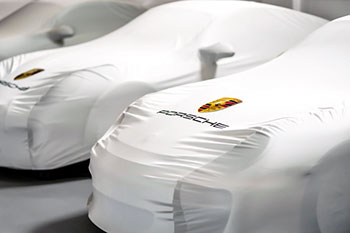
We recommend you cover the car and crack the windows a little. This helps to reduce the chance of moisture building inside the car and keeps the interior fresher for the spring. A good quality soft cover helps to keep dust off the car, so you are ready to go in the spring. The cover can also help avoid minor traffic issues, such as people walking by in the garage with a snow shovel and clipping the car!
Clean and Condition Leather and Interior Surfaces
Clean the interior, removing anything that won’t be pleasant in the spring – anything organic will cause unpleasant odors and attract unwanted guests. Conditioning the leather helps to avoid cracking and prevents any drying out. Make sure you get under the floor mats and ensure the materials are as clean as possible.
Tires – Avoiding Flat Spots
Storing your Porsche will result in flat spots on the tires. These cause nasty vibrations in the spring and in worse cases, they won’t go away with driving. To avoid this, we recommend you add 5psi to the tire pressures and purchase a set of tire cradles. The cradles help avoid the flat spots on the tires and relieve the need to lift the vehicle which can weaken the suspension over time.
 Avoid the Parking Brake
On many Porsche models the parking brake is electronically operated. Failure of the parking brake is quite common and the last thing you want in the spring is to find a failed or seized parking brake preventing you from driving the car out of your garage. Instead, use wheel chocks to ensure the car will not move.
Transmission – Neutral or P.
Many people choose to store the car in no gear or neutral rather than P. There really isn’t any mechanical advantage to this, however, there is a practical advantage. In the worst case of not having any battery power in the spring, or a mechanical issue such as a no start, it’s considerably easier to move the car if the car was stored in neutral.
Front Lid Open and Light Disconnected
Leave the front lid on the 911, Boxster, or Cayman slightly open. This makes accessing the battery in the event of a problem after storage considerably easier. As a precaution, it’s best to disable the light inside the trunk area at the same time to prevent accidentally leaving it turned on and draining the battery.
 Use a Battery Maintainer – Battery Health
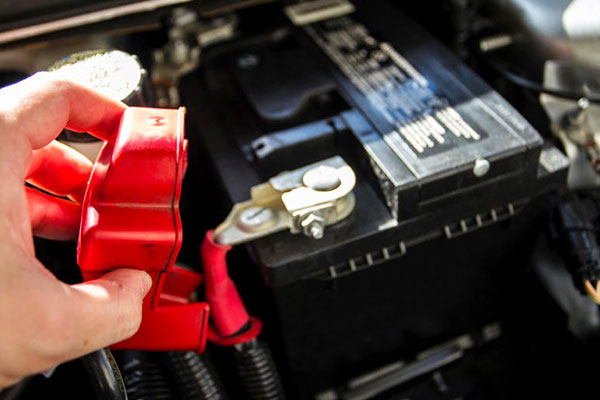
Eventually, you’ll need a new battery. Using a quality battery maintainer is a good idea for storage, however, the maintainer will just maintain e.g. not improve the battery if it is close to the end of it’s life.
The best thing to do is to get the battery tested for cold start performance before you put it in storage. That way you know it will be healthy when you need it come springtime – a CCA test will confirm the health of the battery and it’s ability to support you for next years driving season.
We don’t recommend the maintainers that connect to the in-car socket or cigarette lighter plug. Connecting directly to the battery terminals is the best way to maintain it.
Avoid Starting the Car During Storage
Many people believe consistently running the car for short periods during storage is a good idea. Don’t do this. It’s better to leave the car without running the engine for the duration of the storage period. This why:
- On cold start, the fuel mixtures are high and often leave unburnt fuel in the cylinders if run for a short period. Unburnt fuel dilutes and removes oil film from the cylinder walls – bore scoring. It also enters the oil sump, reducing the viscosity of the oil and degrading the oil performance come springtime.
- Synthetic oil produces sulfuric and nitric acids when it doesn’t get to full operating temperature. These acids attack bearings, cylinder walls, and internal surfaces, corroding metal over time. Synthetic oil can seriously degrade into engine damaging chemicals when warmed and cooled off quickly.
- Every engine start creates water vapor as a combustion byproduct. If the engine cools quickly, that vapor condenses inside the crankcase. Moisture mixes with blow-by gases and forms sludge. You can see this inside the oil filler cap on many Porsche models – milky or foamy residue on the underside of the filler cap is the result of moisture forming in the oil. This process also accelerates oxidation and corrosion of engine internals.
- Depletion of oil additives also increases rapidly with multiple cold starts. Detergents, dispersants, and TBN (the oils ability to neutralize acid) get consumed faster when acids and contaminants build up and moisture stays trapped in the system.
- Multiple short run cold starts also makes synthetic oil prone to form more oil sludge. The combination of moisture, fuel, and cold temps promotes oxidation and polymerization that leads to sticky deposits in lifters, cam journals, and oil control rings. This results in restricted oil flow, higher wear and reduced performance — this is especially true on high-tolerance performance engines found in the 911, Boxster, or Cayman.
 How to Avoid Oil Problems While Storing Your Porsche
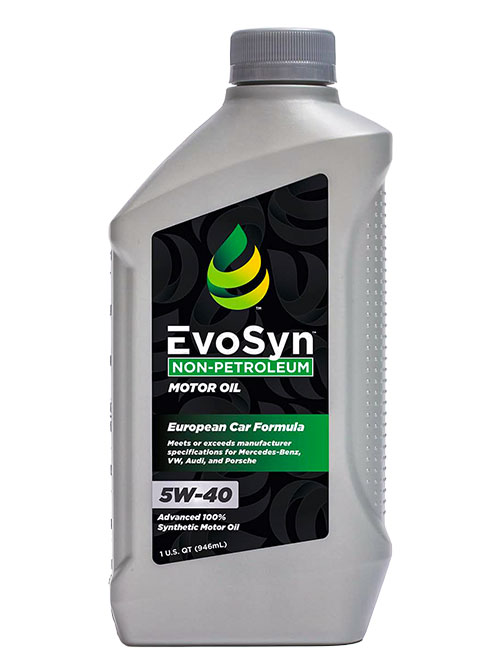
The simple way to avoid problems with your oil while storing your Porsche, is to perform an oil change and drive prior to storage with Evolve EvoSyn. Evolve Oil is a renewable plant based hydro-carbon oil that does not exhibit any of the problems associated with petroleum-based synthetic oils approved by Porsche. Evolve EvoSyn does not degrade, form acids, deposits, or sludge, during storage and is a considerably healthier option for Porsche engines. That’s why it’s trusted by restoration companies like Canepa.
The Downside of Not Starting Your Engine During Storage
Not starting your Porsche engine during storage has one significant disadvantage. Petroleum-based synthetic oils approved by Porsche do not cling to engine surfaces very well. If you’ve let your Porsche sit for any length of time, you’ll notice the increased noise from the lifters and the valvetrain when you first start the engine. This is caused by the oil film leaving the metal surface and falling to the lowest point. The sound is metal on metal and not healthy! You must wait for the oil to warm and reach the furthest parts away from the sump for the noise to go away – much engine wear can result during this time
This problem can be easily solved by using Evolve EvoSyn Oil. The Evolve oil hydrocarbon is attracted to metal and forms an oil film on the surfaces that does not degrade during storage. That means no more nasty metal on metal, clacky clack noises when you start your engine in the spring! The protective Evolve oil film is still on the metal surfaces and provides significantly better cold start protection.
Top Off the Fluids
Storage time is a good moment to top off fluids and mark the levels. Over the storage period, any minor leaks will become self-evident if you have topped off a fluid and recorded the level.
Gas Tank Level and Storage
Gasoline degrades with storage, and it happens faster than most people realize. High-quality, high-octane gas shows noticeable degradation in 3 to 6 months. Ethanol free gas is good for up to a year if well sealed. However, typical US pump gas with an ethanol blend can start to go bad in as little as 2 months.
When ethanol mixed gasoline goes bad it forms gums, varnishes, and sticky deposits. The easy to ignite parts of gasoline quickly evaporate during storage and the blended ethanol part attracts water making the gas weaker and lowering the octane value. In the spring this can often mean:
- Hard starting and rough idle
- Fuel pump failure
- Injector clogging
- Lean running conditions and misfires
- Oxygen sensor fouling
There are two approaches to solving this problem. The first is storing your Porsche with a full fuel tank and adding an approved fuel additive that hopefully maintains the quality of the fuel. The downside of this approach is that after a long winter, you have a full tank of 4 or 5-month-old fuel that you need to use up. Even with additives, that doesn’t sound like the best way to start driving in the spring. Your first few hundred miles are with old fuel!
The second approach is to have a minimum quantity of fuel in the tank and still add fuel additive. With this approach, at beginning of spring you fill the tank with fresh fuel. Now you have a small quantity of aged fuel, as in method one, mixed with a significantly higher quantity of fresh fuel. We favor this approach.
 Alternatives to Winter Storage
You could of course, keep driving your Porsche over the winter. If you live in a state that uses large quantities of road chemicals during the winter, the damage to the underside of the car, metals in the exhaust, fasteners, tires, and rubber suspension components will show up quicker than you imagine.
The alternative approach is to move! Places where you can drive you Porsche year round become increasingly attractive with age – trust us, we know.